
Auto repair invoices rarely look like a typical retail sale. A brake job, a clutch replacement, or a full diagnostic and repair can run into hundreds or thousands of euros or pounds, and customers expect to settle that bill quickly, securely, and without fumbling around for cash they may not even be carrying. For garages, mechanics, and vehicle repair workshops across Europe and the UK, having a dependable way to take card payments, whether at the front desk, at the parts counter, or at the moment a customer collects their vehicle, has become part of running a professional operation.
This guide looks at how card machines and POS terminals actually work inside an auto repair business, from taking a deposit before ordering parts to accepting payment from a mobile mechanic standing in a customer's driveway. It is written for workshop owners, service managers, and independent mechanics who want a practical view of their payment options, not a generic overview of card machines in general.
Why Auto Repair Shops Need Reliable Card Payments
Repair bills tend to be higher than the average retail transaction, which changes what a business needs from its payment setup. A customer picking up their car after a gearbox repair is not paying for a coffee, they are settling a bill that might represent a significant chunk of their monthly budget. A card machine that works reliably, confirms payment instantly, and gives both sides a clear record protects the business from awkward moments at the till and speeds up how quickly a vehicle can leave the workshop.
Reliable card acceptance also reduces the amount of cash moving through the business, which matters for a workshop juggling parts suppliers, staff wages, and daily takings. Customers increasingly expect to pay by card or contactless as a default, and a garage that cannot offer that smoothly risks looking less professional than a competitor down the road, regardless of the quality of the mechanical work.
Flexibility matters too. A workshop might need to take a deposit over the phone before ordering a part, collect the balance in person when the car is ready, and occasionally process a refund if a job changes scope. A payment setup built around how repair businesses actually operate, rather than a generic retail model, makes all of that easier to manage day to day.
Thinking about upgrading how your garage takes payments? Start your commercial evaluation with Ireowo, no obligation, and remember, you pay nothing unless approved.
Card Machines for Garages and Mechanics
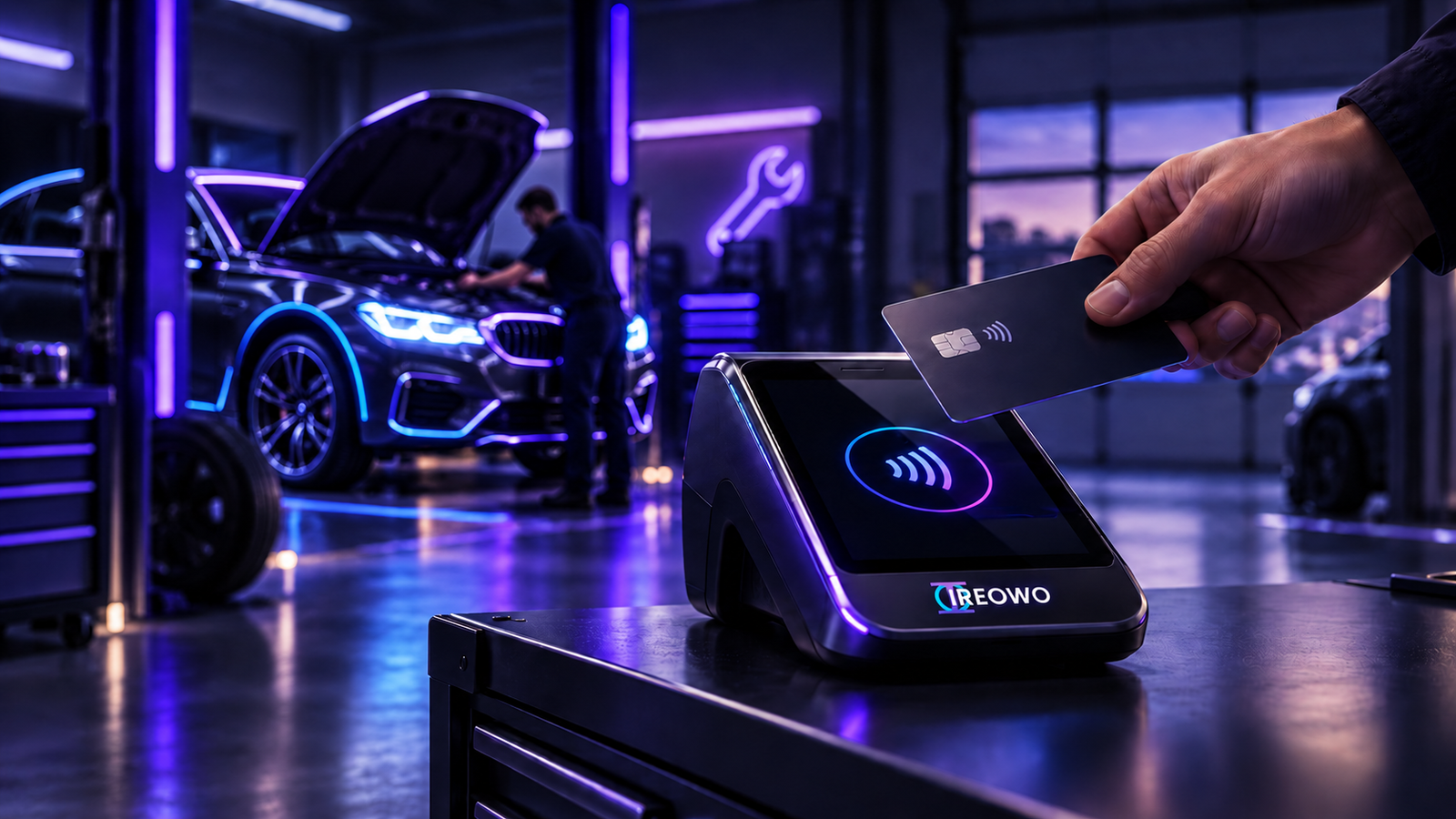
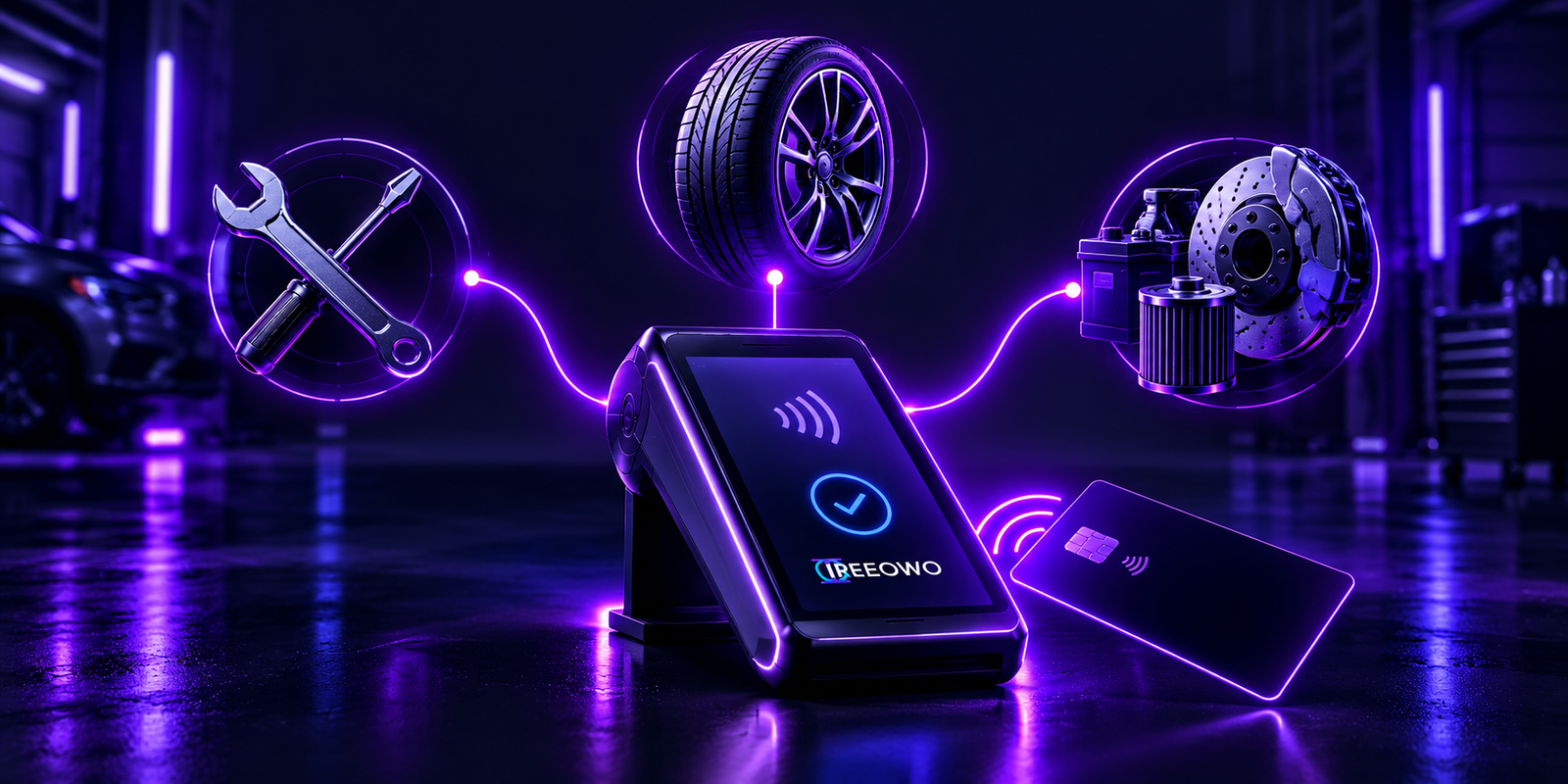
In practice, a card machine gets used in several different spots around a typical workshop. At the reception or service desk, a fixed or countertop terminal handles most day to day transactions, invoices for servicing, MOT fees, and smaller repair jobs. At the parts counter, a separate terminal can take payment for walk in customers buying components without booking a full service.
At the vehicle collection point, many garages prefer a portable terminal so a customer can pay right next to their car rather than queuing back at the desk, which is particularly useful during busy collection times in the late afternoon. And for mobile mechanics who travel to the customer rather than the other way round, a mobile card machine connected over 4G or Wi-Fi means payment happens on the spot, at the customer's home or roadside, without anyone needing to arrange a bank transfer later.
Taking Deposits Before Ordering Parts
It is common practice in vehicle repair for a garage to ask for a deposit before ordering an expensive or specialist part. A specific alternator, a set of performance tyres, or custom bodywork panels might need to be ordered in from a supplier, and a deposit protects the business if the customer later changes their mind or does not return to collect the vehicle.
A card machine that supports partial payments makes this straightforward, the customer pays a deposit on the spot, the part gets ordered, and the balance is settled when the work is complete. This is not a universal rule across every workshop, some garages only request deposits for higher value or custom jobs, and the approach varies by business and by job type. What matters from a payments point of view is having a terminal and process that can take a partial payment cleanly and issue a clear receipt for it.
Taking Payments for High-Value Repairs
Because repair invoices often run well above the average retail transaction, chip and PIN or card present payments are usually the preferred route for larger bills. The customer inserts or taps their card, confirms the transaction on the terminal, and both sides get an immediate confirmation and a printed or digital receipt. For a job worth several hundred pounds or euros, that instant confirmation gives peace of mind to the customer and closes the transaction cleanly for the garage, without the delay or uncertainty of a bank transfer clearing later.
Fixed vs Portable Card Machines for Auto Repair Shops
Most garages end up using more than one type of terminal, matched to where payment actually happens in the workshop.
| Terminal type | Typical use in a workshop |
|---|---|
| Fixed POS | Reception, front desk, cashier area, parts counter |
| Portable POS | Vehicle handover, customer waiting area, workshop floor where appropriate |
| Mobile POS | Mobile mechanics, customer location repairs, off site service calls |
Card Machines for Mobile Mechanics
Mobile mechanics face a slightly different payment challenge, since there is no fixed desk to fall back on. A car might get repaired on a customer's driveway, in a car park, or at the roadside, and the payment needs to happen right there and then. A mobile card machine that connects over Wi-Fi or 4G/5G where supported lets a mechanic take payment on the spot, issue a digital or printed receipt, and confirm the transaction before packing up the tools.
This matters for two practical reasons. First, it avoids the mechanic having to handle or carry large amounts of cash between jobs, which is both a security concern and an administrative headache at the end of the day. Second, it means payment is confirmed immediately rather than relying on an invoice sent later, which some customers forget to settle promptly. For a one person or small mobile operation, that immediacy can make a real difference to cash flow.
Accepting Visa, Mastercard and Contactless Payments
Most modern card machines are built to accept the payment methods customers already expect, Visa and Mastercard as the two dominant card schemes, EMV chip and PIN for card present transactions, and contactless tapping for smaller or faster payments. Many terminals also support mobile wallets such as Apple Pay and Google Pay where the provider and terminal setup allow it. Not every terminal or provider supports every payment method in exactly the same way, so it is worth checking what a specific setup includes rather than assuming every machine behaves identically.
Card Payments for Parts and Labour
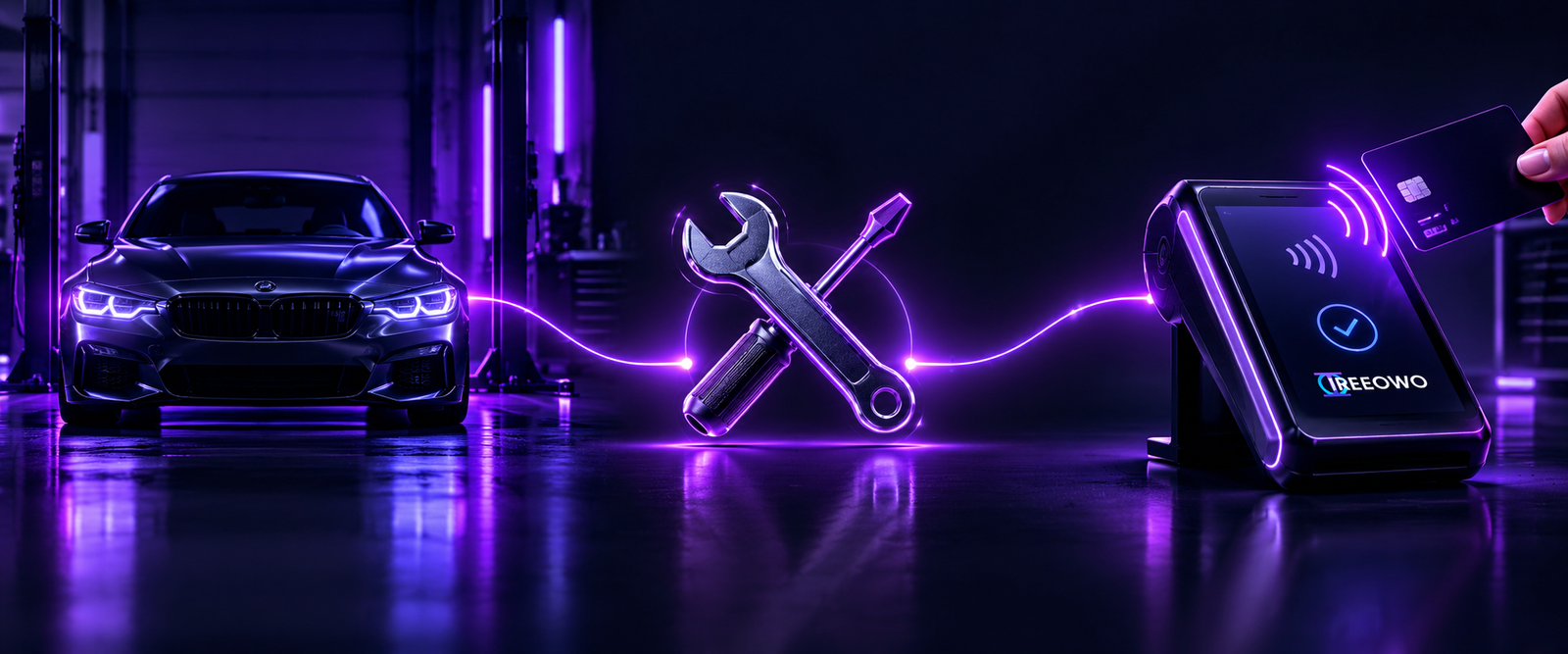
A repair invoice usually combines several elements in one bill, labour, parts, diagnostics, and sometimes additional items like tyres or bodywork materials. A workshop's card machine and invoicing process should make it easy to itemise these clearly, whether that is a full service, a routine maintenance check, a vehicle inspection, or a larger bodywork job. Clear, itemised payment at the point of sale also gives the customer confidence that they know exactly what they are paying for, which matters more in automotive repair than in most other retail settings, since customers rarely have the technical knowledge to judge the work themselves.
Looking for a payment setup that fits how your garage actually works, front desk, parts counter, and vehicle handover included? Talk to Ireowo about your options. You pay nothing unless approved.
Managing Refunds, Cancellations and Repair Disputes
Vehicle repair work carries a particular risk of disputes, since customers sometimes feel a quote grew larger than expected, or a repair did not fully resolve the issue they brought the car in for. A few habits help reduce friction when a refund or partial refund is genuinely needed, giving clear estimates before work begins, getting customer approval before carrying out any additional work discovered mid job, and issuing itemised invoices that match exactly what was agreed. Keeping accurate transaction records and a straightforward refund policy also makes it easier to resolve a disagreement quickly rather than letting it escalate into a formal dispute with the customer's card issuer.
Reducing Payment Disputes in Auto Repair Businesses
Beyond handling a dispute once it happens, most garages can reduce how often they occur in the first place. Clear, plain language descriptions of the repair work, written confirmation from the customer before adding extra work to a job, and itemised invoices that break down labour and parts separately all help. It is also worth double checking that the amount charged on the card machine matches the final invoice exactly, and avoiding any duplicate charges if a payment needs to be retried. Keeping organised transaction records, even just digital receipts stored by date, gives the business something concrete to point to if a customer later queries a charge.
Card Machine Features Auto Repair Shops Should Consider
Not every terminal suits every workshop, so it is worth thinking through which features actually matter for how your garage operates. Useful features to weigh up include reliable connectivity so payments do not stall during a busy handover period, a portable option for vehicle collection, chip and PIN alongside contactless, straightforward refund capability, transaction reporting so you can reconcile takings at the end of the day, flexible receipt options, and enough battery life to last a full working day if the terminal is used away from a charging point. Larger workshops may also want a setup that supports multiple terminals working together. A payment environment that follows recognised card industry security standards, such as those maintained by the PCI Security Standards Council, is also worth having in place, though the detail of what that involves goes beyond the scope of this guide.
Multiple Terminals for Larger Garages
A larger workshop with several service bays and a busy front desk often benefits from more than one terminal working at once, a fixed terminal at reception, another at the parts counter, and a portable unit kept near the vehicle collection area for handovers. This is not something every garage needs, a small independent workshop may manage perfectly well with a single portable terminal, but for a business handling a higher volume of vehicles each day, spreading terminals across the points where payment naturally happens can reduce queuing and speed up how quickly customers get back on the road.
POS Systems for Multi-Location Auto Repair Businesses
For repair businesses operating across more than one site, whether a small regional chain or a franchise style group of garages, a POS setup that offers centralised reporting across locations makes life considerably easier. Being able to see transaction activity across every branch from one place, with a standardised payment setup at each site, simplifies bookkeeping and gives owners and managers clearer visibility into how each location is performing without having to chase down separate reports from each workshop individually.
How Much Does a Card Machine Cost for an Auto Repair Shop?
Card machine costs for a garage typically involve a combination of a few components, transaction fees charged as a percentage or fixed amount per payment, monthly terminal fees, either a rental cost or an outright purchase price for the hardware, acquiring fees charged by the payment partner, and chargeback fees that may apply where relevant. There is no single standard figure that applies across every garage, since the actual cost depends on expected turnover, average repair value, the mix of card types customers use, how many terminals the business needs, and the overall payment setup and provider chosen. A workshop processing mostly high value repairs will have a different fee structure to one handling a high volume of smaller service jobs, so it is worth comparing options against your own transaction profile rather than a generic industry average.
Card Machines for Auto Repair Shops in Europe & the UK
Payment setups for auto repair businesses can vary from country to country, shaped by the terminal provider chosen, local card acceptance habits, and the specific type of business operation. A garage in the UK, Germany, France, Spain, or the Netherlands may end up with a slightly different mix of terminal types and payment methods depending on local supplier availability and how customers in that market typically prefer to pay. Broader card and contactless usage trends across the region are tracked publicly by bodies such as the European Central Bank for the euro area and UK Finance for the UK market, if you want a wider picture beyond any single workshop. The underlying need, however, stays consistent across markets, a workshop that can take card and contactless payments smoothly, whatever the size of the invoice, is better placed to serve its customers than one still relying mainly on cash or bank transfer.
Why Work With Ireowo?
Ireowo helps auto repair businesses identify suitable card machine and POS options based on how the business actually operates, its expected transaction profile, the jurisdiction it trades in, whether it needs fixed, portable, or mobile terminals, and whether it is running one workshop or several. Rather than pushing a one size fits all terminal, the goal is to match the payment setup to the realities of a repair business, high value invoices, occasional deposits, parts and labour combined on one bill, and the need for both a front desk terminal and something portable for vehicle handover. Availability depends on the payment setup and provider.
Frequently Asked Questions
What is the best card machine for an auto repair shop? +
It depends on how the workshop takes payment. A busy reception desk usually benefits from a fixed or countertop terminal, while a garage that hands vehicles back to customers directly may prefer a portable terminal, and a mobile mechanic will typically need a mobile POS device that connects over Wi-Fi or mobile data.
Can mechanics accept card payments? +
Yes, mechanics and garages can accept card and contactless payments through a card machine, whether fixed at a workshop desk or portable for use around the site.
Can mobile mechanics use a card machine? +
Yes, mobile card machines connect over Wi-Fi or mobile data, allowing a mechanic to take payment at a customer's home, a car park, or the roadside, without needing to invoice separately after the job.
Can garages take deposits by card? +
Many garages take a card deposit before ordering an expensive or specialist part, then collect the remaining balance when the repair is complete and the vehicle is ready for collection.
Can auto repair shops accept contactless payments? +
Most modern card machines support contactless payments alongside chip and PIN, which is useful for smaller transactions like parts purchases or minor repairs.
Can a garage use more than one POS terminal? +
Yes, larger workshops often run several terminals at once, for example one at reception, one at the parts counter, and a portable unit for vehicle handover, especially where the business handles a higher daily volume of vehicles.
Can mechanics accept Apple Pay and Google Pay? +
Many card machines support mobile wallets such as Apple Pay and Google Pay, though this depends on the specific terminal and provider, so it is worth checking what a given setup includes.
How much does a card machine cost for a mechanic? +
Costs typically include transaction fees, monthly terminal fees, and either a rental or purchase cost for the hardware, and the overall amount depends on turnover, average repair value, card mix, and the number of terminals in use.
Does Ireowo provide card machine options for garages in Europe and the UK? +
Yes, Ireowo helps auto repair businesses across Europe and the UK explore suitable card machine and POS options based on their specific payment needs and business setup.
Need a card machine for your auto repair shop or garage?
Ireowo can help you explore suitable POS and card acceptance options for mechanics and vehicle repair businesses across Europe and the UK.
Start processing payments for your high-risk business now.
Contact Ireowo to discuss your payment setup
You pay nothing unless approved.