

Ticketing and event businesses take a wide mix of online payments. Customers buy one-off tickets, early bird passes, VIP packages, group bookings, upgrades and add-ons. Many orders include several tickets, and many cardholders pay from another country.
Ticketing also works differently from standard ecommerce. The customer pays in advance for an event that may happen weeks or months later. The payment must go through at the moment of purchase, and the ticket must be issued straight away. If the event changes, the money may need to go back just as smoothly.
This guide explains how payment processing for ticketing businesses works in Europe and the UK, and what ticketing platforms and event organisers should look at when they choose a setup for online ticket sales.
How Ticketing Businesses Get Paid
Event payment processing has to cope with many different order types. The most common transaction types are:
- Standard ticket purchases
- VIP tickets and premium seating
- Add-ons such as parking, merchandise or drinks packages
- Group tickets with several attendees on one order
- Upgrades after the first purchase
- Event packages that bundle several items
- Booking fees, where the platform charges them separately
A good payment setup handles all of these without confusion. Each order should show the right amount, the right items and a clear record of what was paid.
Online Ticket Payments and Card-Not-Present Transactions
Online ticket sales are card-not-present transactions. The cardholder is not at a terminal, so the checkout has to do the work of building trust.
A solid online ticket payment gateway should support:
- A secure checkout page that loads quickly on mobile and desktop
- Clear payment confirmation on screen
- Customer receipts sent by email straight after payment
- Ticket issuance only after a successful payment
- Strong customer authentication where it applies
The order of events matters. If tickets are issued before a payment is confirmed, or confirmed payments do not trigger tickets, support teams end up fixing mistakes by hand.
Payments for Concerts, Festivals and Nightlife Events
Live entertainment tends to sell in waves. A concert ticket payment gateway has to cope with a busy on-sale day, then quiet weeks, then a final push close to the date.
Festivals often add layers. Buyers may choose day tickets, weekend passes, camping or VIP areas in one basket. Some festivals also sell in instalments or in separate phases. Payment processing for festivals should record each part of the order clearly.
Club nights and nightlife events usually have lower ticket values but higher order counts. Fast checkout matters more here, because buyers often decide late and pay from their phones.
Payments for Conferences, Exhibitions and Business Events
Business events follow different buying patterns. Conference tickets and delegate registrations often carry higher values than nightlife tickets. Buyers may pay with company cards, and one person may register several delegates at once.
Trade shows, exhibitions and corporate events may also sell stand space, workshop places or networking add-ons. Orders often need clear invoices and receipts so finance teams can match them to company records.
Because average ticket values and buying habits differ from consumer events, it helps to describe your event model clearly when you review a payment gateway for conference tickets.
Early Bird, Standard and VIP Ticket Payments
Most events sell several price tiers over time. Early bird tickets open first at a lower price. Standard tickets follow. VIP and premium packages sit at the top, and last-minute tickets may close the sales window.
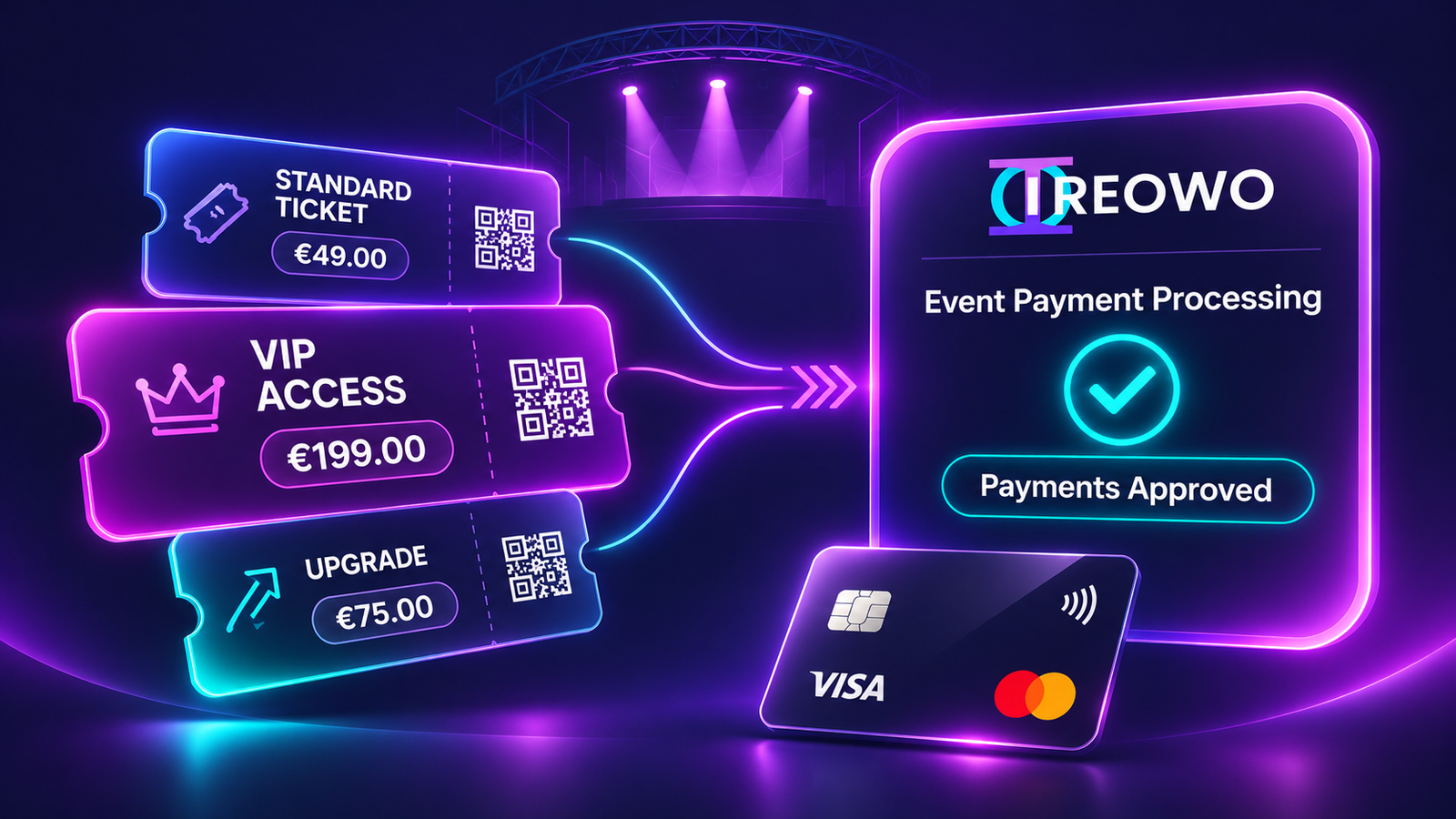
That means your average ticket value can shift a lot between launch day and event week. A payment setup should handle low and high values cleanly. It should also report each tier separately, so you can see which pricing stage is performing.
One-Off Ticket Sales vs Event Memberships
Most ticket sales are one-off payments. The customer pays once and receives access to a single event.
Some event businesses also offer memberships, season passes or recurring access. These are a smaller part of the picture for most organisers, but they can sit alongside ticket sales. If you offer them, make sure the payment setup can handle both models side by side.
Handling High-Volume Ticket Releases
A popular on-sale can bring thousands of buyers to checkout within minutes. This is one of the biggest payment challenges in ticketing.
When traffic spikes, a few things matter most:
- Payment reliability. The payment flow should stay available when demand jumps.
- Checkout stability. Slow pages and timeouts push buyers to abandon or retry.
- Clean retries. A buyer who pays twice by mistake creates extra refunds and support work.
- Clear error messages. Customers should know whether a payment failed or is still processing.
- Fewer unnecessary failures. Smooth authentication and sensible checkout design help genuine buyers complete their orders.
Plan for ticket drops before they happen. Talk to your payment partner about expected volumes and launch dates, so the setup is ready for the surge. Sudden changes in volume can sometimes lead to an account review, so it helps to understand why a payment gateway may freeze funds and how to plan ahead.
Planning a large ticket release?
Ireowo can help you explore payment options for high-demand on-sales. You pay nothing unless approved. Start your pre-application here.
International Customers and Cross-Border Ticket Sales
Ticketing is cross-border by nature. Fans travel to concerts, delegates fly in for conferences and festival crowds often include buyers from many countries.
For ticket sellers, this means:
- Accepting cards issued outside your home country
- Offering more than one currency, where your setup supports it
- Showing the full price clearly, so buyers know what they will pay
- Keeping the payment record consistent across markets
The focus here is simply selling tickets to buyers from different countries. It is not about travel services.
Visa, Mastercard and Digital Wallets
Visa and Mastercard are the main card brands most ticket buyers use online. Many event businesses also want to offer Apple Pay and Google Pay, because mobile checkout is fast and familiar.
Wallets can help on busy sales days, since buyers do not need to type card details. Support for specific wallets and payment methods depends on the provider and the setup, so confirm what a payment gateway for events can offer before you plan your checkout.
Refunds, Event Changes and Ticket Cancellations
Events change. Even well-run organisers sometimes face cancellations, postponements or date changes. Each case creates a different payment task:
- Cancelled events: tickets may need full refunds across many orders.
- Postponed events: customers may keep their tickets for the new date, or ask for a refund.
- Date changes: buyers who cannot attend the new date may contact support.
- Partial refunds: for example, when one ticket is removed from a group order.
- Ticket upgrades: a customer moves from standard to VIP and pays the difference.
- Customer disputes: a buyer goes to their bank instead of contacting you.
Clear refund rules, published before the sale, make these moments easier. They also give your support team something firm to point to. If you want a travel-side view of refund handling, our guide on tour operator chargebacks covers a different industry in detail.
How Event Businesses Can Reduce Payment Disputes
Many disputes come from confusion, not bad intent. A few simple habits reduce them:
- State the event date, time and venue clearly on the checkout page
- Describe each ticket type in plain language
- Publish a transparent refund policy before payment
- Send a confirmation email straight after purchase
- Use a billing descriptor that customers recognise
- Keep accurate transaction records for every order
- Make customer support easy to reach
When buyers understand what they bought, they are less likely to question the charge later.
Billing Descriptors for Ticketing Businesses
The billing descriptor is the name that appears on a customer's card statement. For ticketing, it should help the buyer connect the charge to the purchase.
A good descriptor is recognisable, consistent and linked to your company or event brand where appropriate. Buyers who see an unfamiliar name on their statement may not remember the ticket order, and some will contact their bank.
Ireowo does not recommend disguising the underlying business or using misleading payment descriptors.
Fraud Risks in Online Ticket Sales
Tickets can be attractive to fraudsters because they are digital, carry real value and can be resold. Common risks include:
- Stolen card details used for ticket purchases
- Fraudulent orders for high-demand events
- Account abuse on ticketing platforms
- Unusually high-value orders
- Suspicious buying patterns, such as many tickets bought quickly
- Repeated failed payments from the same source
Fraud monitoring should run alongside your checkout, so that suspicious activity can be reviewed without blocking genuine buyers. Work with your payment partner on the tools and settings that suit your event model. For a broader look at protecting a platform that sells on behalf of others, see our guide to fraud prevention strategies for platforms.
Chargebacks After an Event Has Taken Place
Some disputes appear after the event is over. Typical ticketing scenarios include:
- A customer says they did not attend and asks for their money back
- A buyer does not recognise the ticket purchase
- A customer was charged twice for the same order
- A buyer misunderstood the refund policy
- A dispute involves a ticket that was transferred to another person
Good records help. Order details, confirmation emails, ticket delivery logs and policy wording all show what the customer agreed to.
If disputes rise, card networks may track them through chargeback monitoring programs. For the wider picture, read our guide to the Visa and Mastercard rules every merchant should know.
Payment Reporting for Ticketing Platforms
Ticket sales payment processing produces a lot of data. Useful payment reporting lets you see:
- Ticket revenue by event
- Refunds and partial refunds
- Failed payments
- Chargebacks and their outcomes
- Sales by ticket type or date
- Event-level reconciliation against your own records
Clear reports give your team payment visibility without long manual checks. They also make it easier to spot problems early, for example a sudden rise in failed payments on one event. This is operational reporting, not accounting advice.
Multiple Events and Multi-Venue Payment Operations
Many ticketing businesses run several events at once, sometimes across different venues and cities. For payment processing for ticket platforms, a consistent setup helps. You can benefit from:
- Transaction visibility by event
- Multi-event reporting in one place
- Separate sales tracking for each show or venue
- A consistent payment setup across your event calendar
- Centralised transaction monitoring
This keeps the team focused on selling tickets, not chasing payment data.
Payment Processing for Seasonal and One-Off Events
Event schedules are rarely flat. Summer festivals, Christmas events, conferences, seasonal nightlife and one-off concerts can all create sharp peaks. Some businesses process heavily for a few weeks and very little for the rest of the year.
Transaction volume can vary a great deal by event schedule, so it helps to share your calendar and expected sales windows with your payment partner early.
How Much Does Payment Processing for Ticketing Cost?
There is no single price for every ticketing business. Costs are usually made up of several components:
- A percentage transaction fee
- A fixed charge per transaction
- Gateway fees
- Acquiring fees
- Chargeback fees
- Currency conversion, where applicable
Pricing depends on transaction volume, average ticket value, customer geography, card mix, currencies, event model and payment provider.
For a wider view of how fees work, see our article on high risk payment processing fees.
Payment Processing for Ticketing Businesses Across Europe & the UK
Ticket sales rarely stop at a national border. A promoter in the UK may sell to buyers in Ireland and the Netherlands. A conference in Germany may draw delegates from France, Spain, Italy and Belgium.
That is why many ticketing businesses want one payment setup that can serve customers across Europe and the UK. When you compare options, look at how each provider handles cards from different countries, which currencies it supports and how it reports cross-border sales.
Why Work With Ireowo?
Ireowo helps ticketing and event businesses explore suitable payment processing options, from a ticketing merchant account to an online checkout for international buyers. We look at the details that shape your payment setup, including:
- Your ticketing model
- Transaction volume
- Average ticket value
- Customer geography
- Currencies
- Event frequency
- Payment methods
- International sales
Availability depends on the business model, payment setup and provider.
Frequently Asked Questions
+ Can ticketing businesses accept online card payments?
Yes, ticketing businesses can accept online card payments through a payment gateway and a merchant account. The right setup depends on your event model, ticket values, customer locations and sales volume.
+ Can event organisers accept Visa, Mastercard and digital wallets?
Visa and Mastercard are widely used for online ticket sales, and many setups also offer Apple Pay and Google Pay. Support depends on the provider and the configuration, so it should be confirmed before launch.
+ Can a ticketing platform process payments for multiple events?
Yes. Many ticketing platforms sell tickets for several events and venues at the same time. A good setup gives you transaction visibility and reporting by event, so you can track sales, refunds and disputes separately.
+ What happens when an event is cancelled or postponed?
It depends on your refund policy and the nature of the change. A cancelled event usually leads to refunds. A postponed event may let customers keep their tickets or request a refund. Clear policies and quick communication help reduce disputes.
+ Can Ireowo guarantee payment processing approval for a ticketing business?
No. Availability depends on the business model, payment setup and payment partners involved.
Useful Official Sources
For background on payments in Europe and the UK, these official sources are a good starting point:
Looking for payment processing for your ticketing or event business?
Ireowo can help you explore payment solutions for online ticket sales, festivals, concerts, conferences and international event customers across Europe and the UK.
You pay nothing unless approved.