
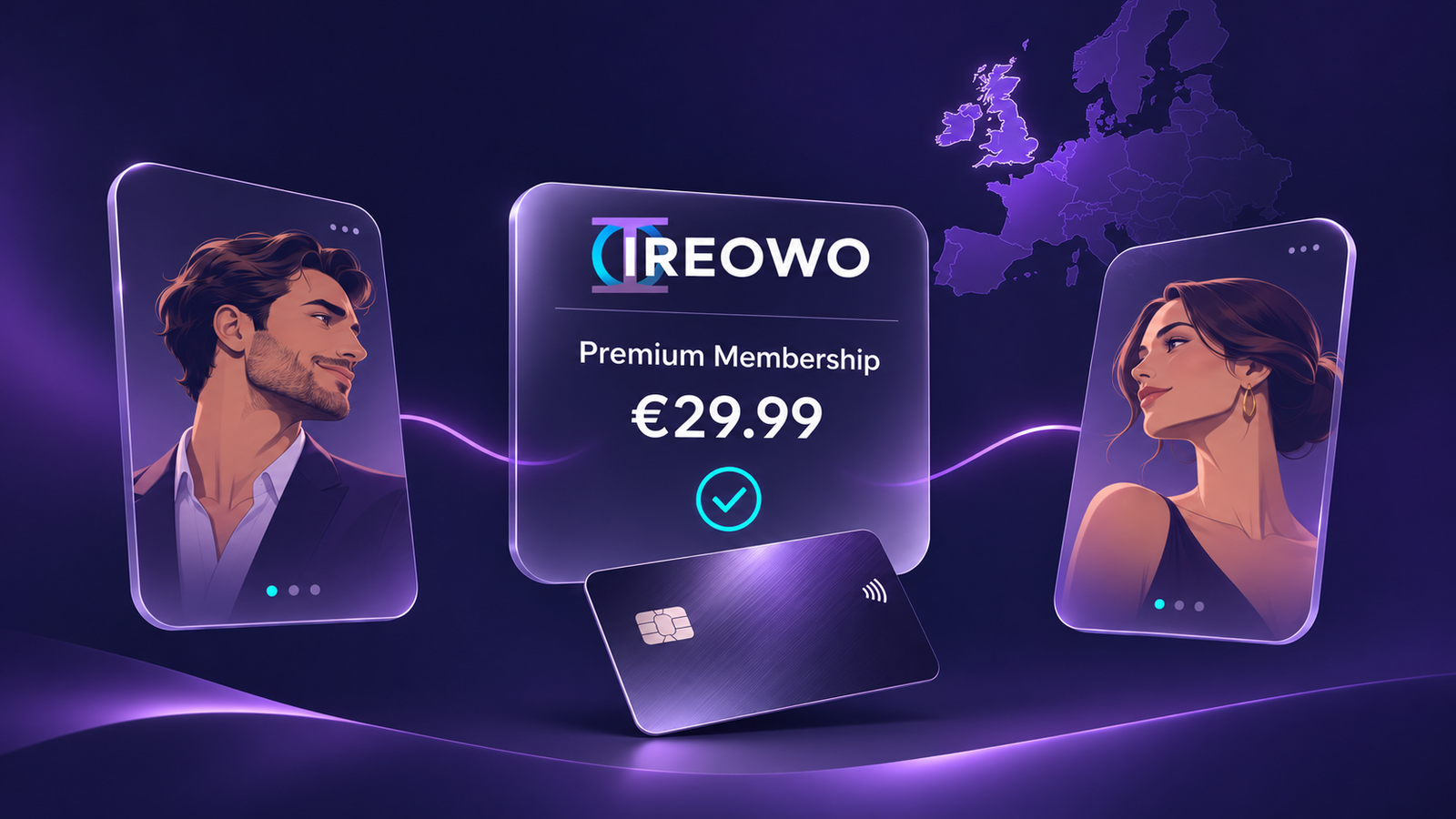
Dating and matchmaking platforms rarely sell one simple product. A single member might start with a monthly premium plan, buy a profile boost on a Friday night, upgrade to an annual membership three months later, and have a card expire in between. Each of those moments is a different payment event, and each one needs to work smoothly for the member and for your finance team.
That mix is what sets payment processing for dating sites apart from a standard online shop. You are not just selling a product once. You are managing recurring memberships, one-off upgrades, renewals, cancellations and a customer base spread across several countries. This guide explains how those payment flows work for dating and membership platforms in Europe and the UK, and what to think about when choosing a payment setup.
How Dating Platforms Make Money
Most dating platforms combine several revenue streams rather than relying on one. The most common are:
- Monthly subscriptions for premium access, often the main recurring revenue line.
- Annual plans for members who prefer a single, larger payment.
- Premium memberships that unlock features such as unlimited messaging or advanced search.
- Profile boosts and featured profiles that give a member extra visibility for a set period.
- One-off account upgrades bought at a specific moment.
- Credits or premium features, on platforms that sell them.
Each stream creates a different type of transaction. Your payment setup needs to handle all of them without forcing members through a clunky checkout.
Recurring Payments for Dating Websites
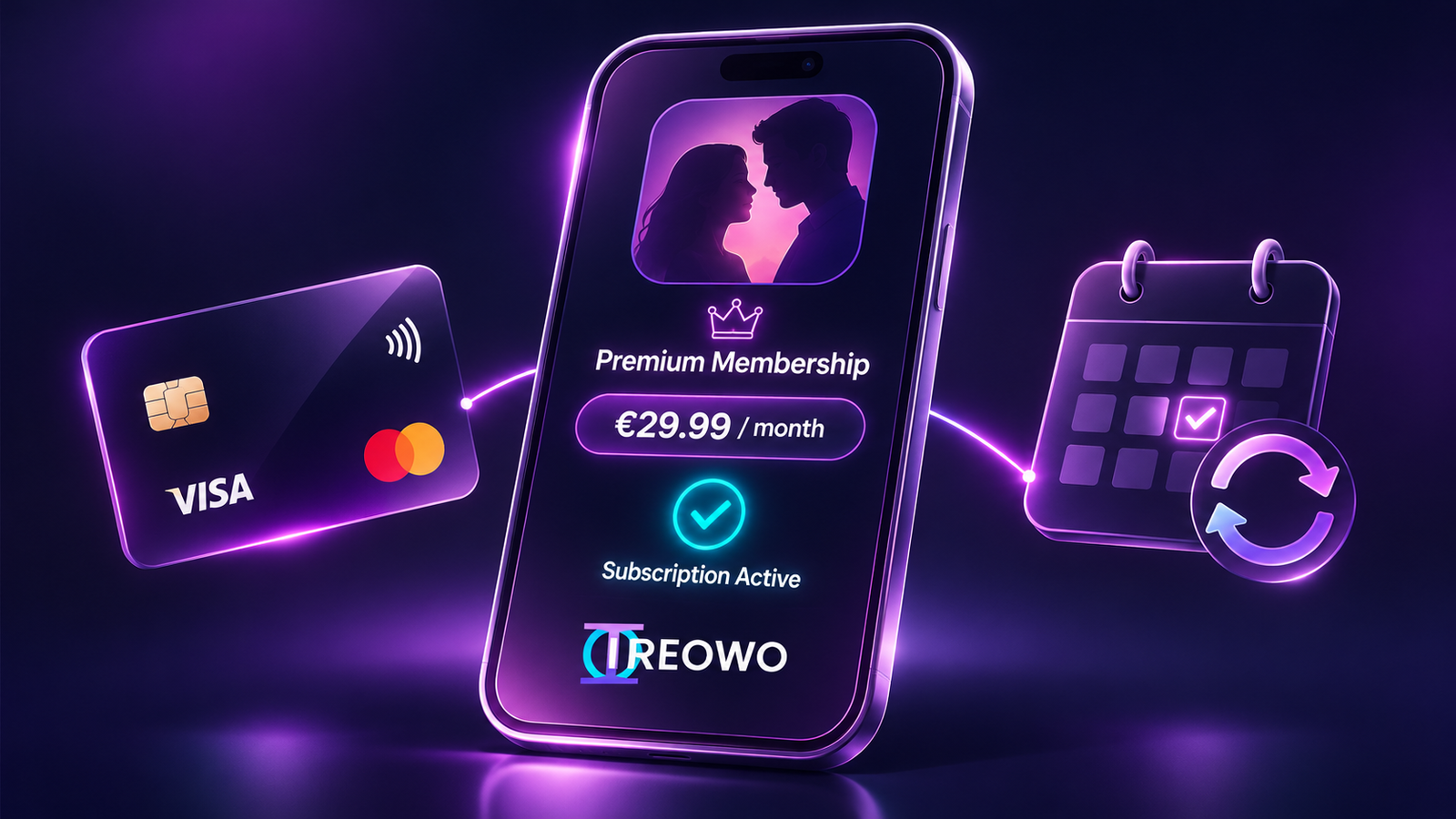
Recurring payments for dating sites usually start with a member choosing a premium plan and agreeing to be charged on a schedule. After the first payment, the platform bills the same card automatically at each renewal. This is how a member keeps premium access without having to re-enter card details every month.
A few points matter in practice:
- Monthly billing means many smaller charges, so a small failure rate can still affect a lot of members.
- Annual billing means fewer, larger charges, where a single decline matters more.
- Automatic renewals depend on clear terms, so members know when and how much they will be charged.
- Card-on-file transactions let the platform bill without the member being present at checkout.
- Membership continuity depends on renewals going through without interrupting access.
For a dating platform, a missed renewal is not just a lost payment. It can mean a member loses messaging access in the middle of a conversation, which is exactly when they are most likely to be frustrated.
Premium Memberships and Account Upgrades
Premium tiers are where many dating platforms earn most of their revenue. A member might pay for unlimited messaging, enhanced search, advanced filters, extra visibility or a bundle of several features. From a payments point of view, what matters is how those purchases are charged.
Some upgrades are sold as part of a recurring plan. Others are bought separately, mid-membership, by someone who is already subscribed. Your payment flow needs to handle both cleanly, including cases where a member upgrades from a basic plan to a premium one and expects the charge to be clear and correct.
One-Off Payments vs Recurring Memberships
Many dating platforms need to support both models at the same time.
One-off payments usually cover:
- Profile boosts
- Premium visibility for a fixed period
- Single account upgrades
- Credits, where the platform uses them
Recurring payments usually cover:
- Monthly membership
- Annual membership
- Premium subscription
The reason to support both is simple. A member who is not ready to commit to a subscription may still pay for a one-off boost. Another may subscribe and then add a boost on top. If your payment setup only handles one type well, you risk losing revenue or creating a confusing experience at checkout. If you are comparing providers, talk to Ireowo about your payment setup and describe both flows from the start. No upfront fee until approval.
Monthly vs Annual Dating Subscriptions
The choice between monthly and annual plans shapes your payment experience as much as your pricing.
- Monthly plans mean smaller recurring charges. They are easier for members to accept, but they create more billing events and more chances for a renewal to fail.
- Annual plans mean a larger payment up front. Members tend to scrutinise them more, and a renewal twelve months later can come as a surprise if the terms were not clear.
- Renewal timing matters in both cases. A member who joined on a quiet Tuesday in March expects to be billed on that cycle, not on a different date.
- Customer expectations differ. Someone on a monthly plan may cancel casually. Someone on an annual plan expects a clear reminder before renewal.
Whichever you offer, billing continuity depends on stored payment details being handled correctly and renewals being processed on the date the member expects.
Failed Membership Payments and Involuntary Churn
Not every lost member chooses to leave. Some are lost because a payment failed. This is often called involuntary churn, and dating platforms see it for familiar reasons:
- Expired cards
- Insufficient funds at the time of renewal
- Issuer declines
- Changed payment details after a card is replaced
- Failed renewals for other technical reasons
When a recurring payment fails, the membership can lapse. The member loses premium features, may not realise why, and may simply drift away. The size of the problem depends on your member base, your markets and your payment setup, so it is worth tracking failed renewals as their own metric rather than treating them as ordinary cancellations.
Payment Retries and Membership Recovery
When a renewal fails, there are several ways to try to keep the membership active, depending on what your payment provider supports:
- Retries, where supported, to attempt the charge again after a short interval.
- Payment reminders sent to the member before and after a failed renewal.
- Clear member communication, explaining what happened and what to do next.
- Easy ways to update payment details, ideally in a couple of taps on mobile.
- Restoring premium access quickly once the payment goes through.
For a dating platform, speed matters. A member who updates their card should get premium access back straight away, not after a support ticket. Results vary by platform and audience, so it is best to measure your own recovery rather than rely on general figures.
Card-on-File Payments for Dating Platforms
Card-on-file payments let a platform store a member's payment credentials, with their agreement, so that future charges can be made without asking for the card again. On a dating platform, that can support renewals, premium subscriptions, recurring memberships and later account upgrades.
At a high level, this relies on tokenisation, where the actual card number is replaced by a secure token held by the payment provider. This helps limit how much sensitive card data your own systems handle. The details depend on your provider and setup, so this is something to discuss with your payment partner rather than assume.
Visa, Mastercard and Digital Wallets
Most dating platforms accept Visa and Mastercard, since cards are still the main way members pay online. In fact, ECB payment statistics show cards as the most used non-cash payment method in the euro area. Online dating payments are card-not-present transactions, because the member is not physically presenting the card. Recurring card payments follow the card network rules for stored credentials and subscriptions, and Mastercard publishes its own rules and compliance programmes for processors and merchants.
Digital wallets such as Apple Pay and Google Pay can make checkout faster on mobile, which suits dating apps where the member is already on their phone. Support for wallets and specific payment methods varies by provider, market and business model, so it should be confirmed rather than assumed.
Billing Descriptors and Customer Recognition
The billing descriptor is the name that appears on a member's card statement. For a dating platform, this is more important than it might seem. Members often want discretion, but they also need to recognise the charge when they see it.
A clear, consistent descriptor helps in several ways:
- It lets members recognise the charge as coming from your platform.
- It reduces confusion when a renewal appears weeks after sign-up.
- It reduces unnecessary disputes from members who do not recognise the merchant name.
- It keeps your billing identity consistent across monthly, annual and one-off charges.
Ireowo does not recommend disguising the underlying business or using misleading payment descriptors. A descriptor that is recognisable and accurate protects both the member and the merchant.
Refunds and Cancellations on Dating Platforms
Cancellations and refunds are a regular part of running a dating platform. The most common situations include:
- Members cancelling a subscription and asking when it ends
- Confusion about renewal timing
- Refund requests after an unexpected renewal
- Duplicate charges
- Disputes over a boost or upgrade that a member says they did not authorise or did not receive
- Membership termination by the platform
Clear cancellation communication does a lot of the work here. When a member knows how to cancel, when access ends and whether a refund applies, they are less likely to contact their bank instead. Your terms and refund approach should reflect the rules that apply to your business, and you may wish to take legal advice on them, since this article is not legal advice.
Reducing Chargebacks in Dating Businesses
Chargebacks on dating platforms often come from misunderstanding rather than bad intent. A few practical habits help:
- Transparent subscription terms shown before the member pays.
- Clear renewal dates and reminder emails ahead of annual renewals.
- Recognisable descriptors so the charge is not a surprise on a statement.
- Accessible cancellation that does not require a long search through account settings.
- Responsive support channels so members can ask before they dispute.
- Transaction records that show what was bought, when and on which account.
- Duplicate payment prevention so a double tap does not produce two charges.
- Clear premium feature descriptions so members know what a boost or upgrade includes.
None of these remove disputes entirely, but together they make it easier to resolve problems before they reach the card scheme.
Fraud and Account Abuse on Dating Platforms
Dating platforms face a mix of payment fraud and account abuse. At a high level, this can include stolen cards used to buy memberships or boosts, fake accounts, multiple account creation and suspicious payment behaviour such as repeated failed attempts.
The payment side of this is about monitoring and prevention: watching for unusual patterns, using the fraud tools your provider offers and keeping good records. Fraud controls should be balanced against member experience, because overly strict rules can block genuine members. The right approach depends on your platform and your provider.
B2C Dating Platforms vs Membership Communities
Not every membership platform works like a dating site, and the payment model differs.
Dating platforms usually rely on:
- Recurring premium access
- Profile upgrades
- Boosts
Membership communities usually rely on:
- Access fees
- Recurring memberships
- Premium tiers
The overlap is real, since both charge for access, but dating platforms add frequent small purchases and short-term visibility products that communities often do not. That is why a payment setup for a matchmaking business should be described clearly to a provider, rather than treated as a generic membership site.
International Dating Platforms and Multi-Currency Payments
Many dating platforms serve members across several countries. A site launched in the UK may quickly attract members in Ireland, Germany or Spain, each paying with a card issued in a different country and possibly a different currency.
Points to consider include:
- International cards and how they perform with your provider
- Pricing in more than one currency
- Cross-border payments and how they are settled
- A local pricing experience, so members see amounts in a familiar currency
- Currency conversion, which may add cost depending on the setup
Cross-border card payments in Europe are also shaped by industry work on standardisation. The European Payments Council, for example, is a founding member of the group promoting card harmonisation across SEPA. Costs and treatment still vary by provider and structure, so it is best to ask for specifics rather than assume. Tax treatment is a separate matter for your advisers.
Payment Reporting for Dating Platforms
Good reporting helps you understand what is actually happening in your payments. For a dating platform, useful views usually include:
- Subscription revenue, separated from one-off upgrades
- Premium membership revenue over time
- Failed payments and renewal outcomes
- Refunds
- Chargebacks
- Transaction reconciliation, so payouts match what your platform recorded
Reporting that separates recurring and one-off income makes it much easier to see where revenue is coming from. This is operational information, not accounting advice.
Migrating a Dating Platform to a New Payment Provider
Changing payment provider is a significant step for a platform with active subscribers. The main concern is recurring payment continuity: members should not lose premium access or be asked to re-enter their card details unnecessarily.
Where supported, token migration can move stored credentials from one provider to another. It is not always available, and it depends on the providers involved and how the credentials are held. Planning the transition carefully, and communicating with members if anything changes, helps avoid unnecessary disruption.
How Much Does Payment Processing for a Dating Site Cost?
There is no single price for payment processing for a dating site. The overall cost is usually made up of several components:
- A percentage transaction fee
- A fixed transaction charge
- Gateway fees
- Recurring billing fees, where applicable
- Acquiring fees
- Chargeback fees
- Currency conversion costs, where applicable
Pricing depends on transaction volume, average transaction value, subscription model, markets, currencies, card mix and payment provider. Because every platform is different, a quote based on your real profile is more useful than a headline rate.
Payment Processing for Dating Platforms Across Europe & the UK
Dating is a cross-border business by nature. A platform based in the UK may have members in Ireland and the Netherlands. One based in Germany may attract users in France, Belgium and Italy. A Spanish platform may grow quickly across several neighbouring markets.
That makes it important to think about where your members are, which cards they use and which currencies they expect, rather than looking at one country in isolation. Availability depends on the business model, payment setup and provider.
Why Work With Ireowo?
Ireowo helps dating and membership businesses explore suitable payment processing options based on how they actually operate, including:
- Subscription model
- Recurring billing needs
- One-off upgrade payments
- Customer geography
- Currencies
- Transaction profile
- Payment methods
- International expansion
The aim is a setup that fits your platform, not a generic one. Approval is never guaranteed, and availability depends on the payment partners involved.
Frequently Asked Questions
+ Can dating websites accept recurring card payments?
Yes, many dating websites accept recurring card payments for monthly or annual memberships. The member agrees to the plan, and the platform bills the stored card at each renewal. Availability depends on the business model, payment setup and provider.
+ Can dating platforms offer both subscriptions and one-off upgrades?
Yes, many platforms offer both. A member can hold a recurring premium membership and also buy one-off items such as profile boosts or visibility upgrades. Your payment setup should be able to handle both types of charge clearly.
+ Can dating sites accept Visa, Mastercard and digital wallets?
Visa and Mastercard are commonly supported, and some providers also offer digital wallets such as Apple Pay and Google Pay. Not every provider supports every payment method, so it is worth confirming what is available for your platform.
+ What happens when a dating subscription payment fails?
The membership may lapse and the member can lose premium features. Depending on your setup, the platform may retry the payment, send reminders and give the member an easy way to update their card. Once payment succeeds, premium access can be restored.
+ Can Ireowo guarantee payment processing approval for a dating platform?
No. Availability depends on the business model, payment setup and payment partners involved.
Ready to Discuss Your Dating Platform's Payments?
Looking for payment processing for your dating or membership platform?
Ireowo can help you explore payment solutions for recurring subscriptions, premium memberships, one-off upgrades and international card payments across Europe and the UK.