
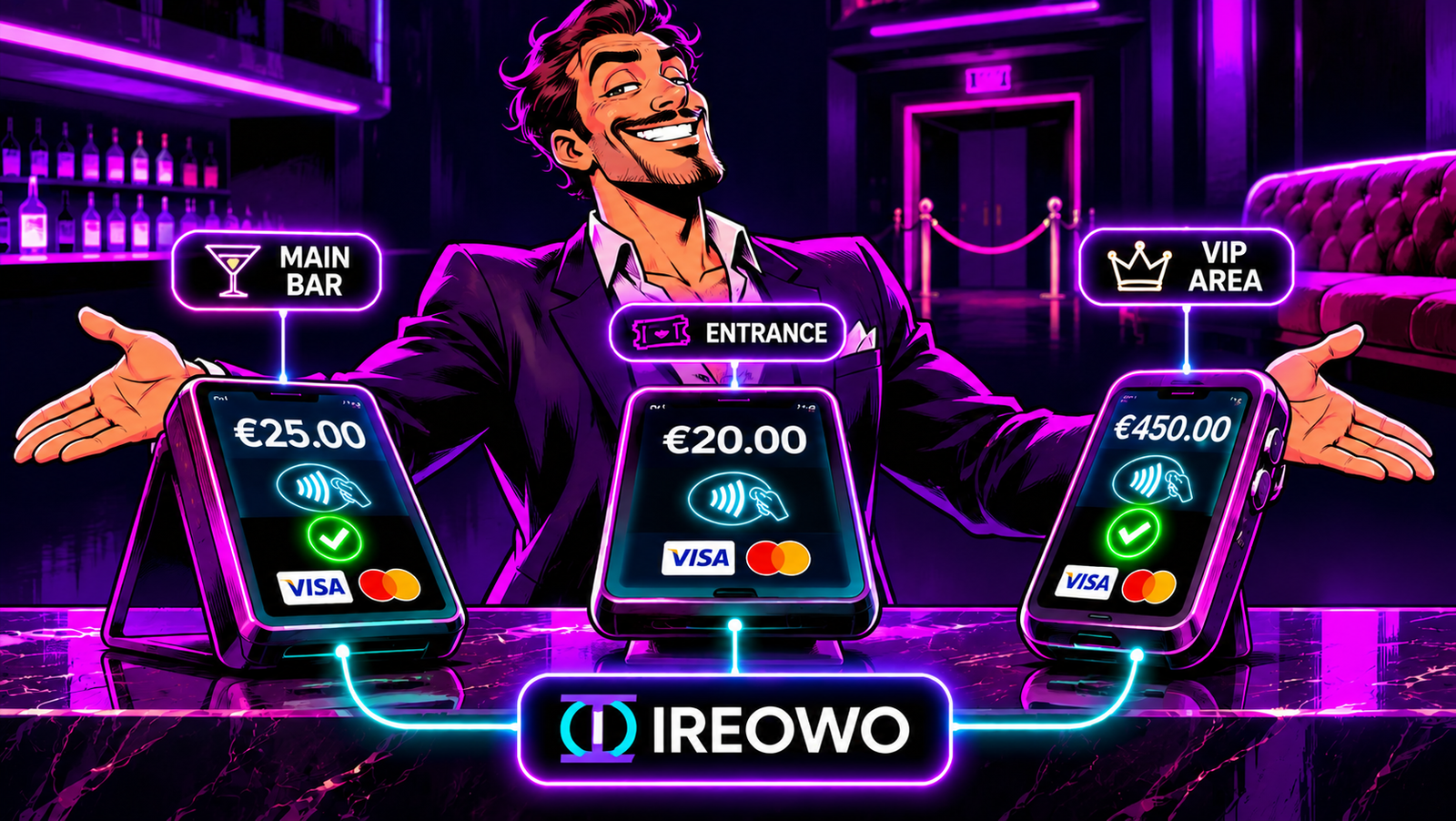
On a busy night, payments in a nightclub rarely happen in one place. Guests pay at the main bar, order again at a second bar, settle a bottle at their table, add drinks in the VIP area, pay at the entrance and leave a coat at the cloakroom. Some also sell merchandise or extras. Each of these is a card present payment, and each one needs to be quick.
That is why choosing card machines for nightclubs is different from equipping a shop with one till. A single fixed terminal behind the bar may cope on a quiet weeknight. It rarely holds up when the room is full, the bar is three deep and table guests want to pay without leaving their seats.
This guide covers physical card machines and POS terminals inside the venue, for nightclub owners, bar operators, cocktail venues and VIP venue managers across Europe and the UK.
What Card Machine Does a Nightclub Need?
There is no single correct terminal. The right setup depends on how your venue works on its busiest night:
- Venue size and layout
- Number of bars, since each bar is a payment point
- Number of staff taking payments at the same time
- Number of payment areas, from the main bar to VIP, entrance and cloakroom
- Customer volume per hour at peak
- Mobility, meaning whether staff go to the customer
- Connectivity in each part of the building
- Peak hours, such as opening rush, headline sets and last orders
Most nightclubs use a mix: fixed terminals where volume is highest, and portable card machines wherever staff move around. Listing every point where a guest hands over a card on a Saturday night usually shows how many terminals you need.
Fixed Card Machines for Nightclub Bars
A fixed or countertop terminal makes sense at the main bar, normally the highest volume payment point in the venue. It stays in a consistent location, so staff always know where it is and guests know where to tap. Transactions are fast: the amount goes in, the guest taps, the next order begins. A wired connection, where available, is usually more predictable than wireless in a crowded building.
One terminal per bar station keeps staff from waiting. If you run a POS system for nightclubs, check whether the till can send the amount straight to the terminal, where the provider supports it, to cut keying errors.
Portable Card Machines for Tables and VIP Areas
Table service changes how payments work. A guest at a table or VIP booth should not have to walk to the bar, queue with their card and walk back. A portable card machine for nightclubs lets staff bring the terminal to the customer instead.
- Guests stay where they are, with their table and their group.
- Service feels premium, which is what table and VIP guests expect.
- The card stays with the customer, who taps or inserts it in front of them.
- Staff work faster, settling a bill and taking the next order in one visit.
- Extra orders come easier when paying takes seconds.
Battery life must last a long night, screens should be readable in low light, and connectivity must reach every table, not only the space near the router.
Multiple Card Machines Across One Venue
Many venues need several terminals working at once. A typical layout might include terminals at the main bar, a secondary bar in another room, portable devices in the VIP area, one at the entrance, others in private rooms and at the cloakroom, and a separate set on each floor.
Several terminals prevent bottlenecks, stop staff passing one device around, provide backup if a terminal fails and let each team work independently.
Planning card machines for several areas of your venue?
IREOWO can help you explore card machine setups for the main bar, secondary bars, tables and VIP areas, based on how your venue operates. You pay nothing unless approved.
Card Machines for Nightclub Bars
Card machines for bars inside a nightclub deal with fast turnover and a constant stream of small and medium transaction values: single drinks, rounds for groups, shots. Orders arrive in waves between sets and before last orders, and contactless is usually the quickest way to clear them.
With several bartenders working their own sections, each needs a terminal within reach. If staff regularly wait for a device, the bar probably needs more POS terminals.
Card Machines for Premium Bars and Cocktail Venues
Premium bars and cocktail venues work differently from an ordinary pub. Guests are usually seated, service is more personal and spend per visit tends to be higher, from signature cocktails to premium bottles. Card machines for cocktail bars need to fit that style.
Here, table service is the norm and customers pay at their tables, so portable terminals do most of the work. A terminal that connects quickly and completes without fuss supports the service guests are paying for. Where your POS for bars and clubs supports it, splitting a bill at the table is useful for groups.
Payments in VIP Areas
VIP areas are often where the highest value payments in a nightclub happen. VIP tables, premium bottle service and private seating areas mean fewer transactions but larger amounts, and guests expect staff to come to them with portable card machines.
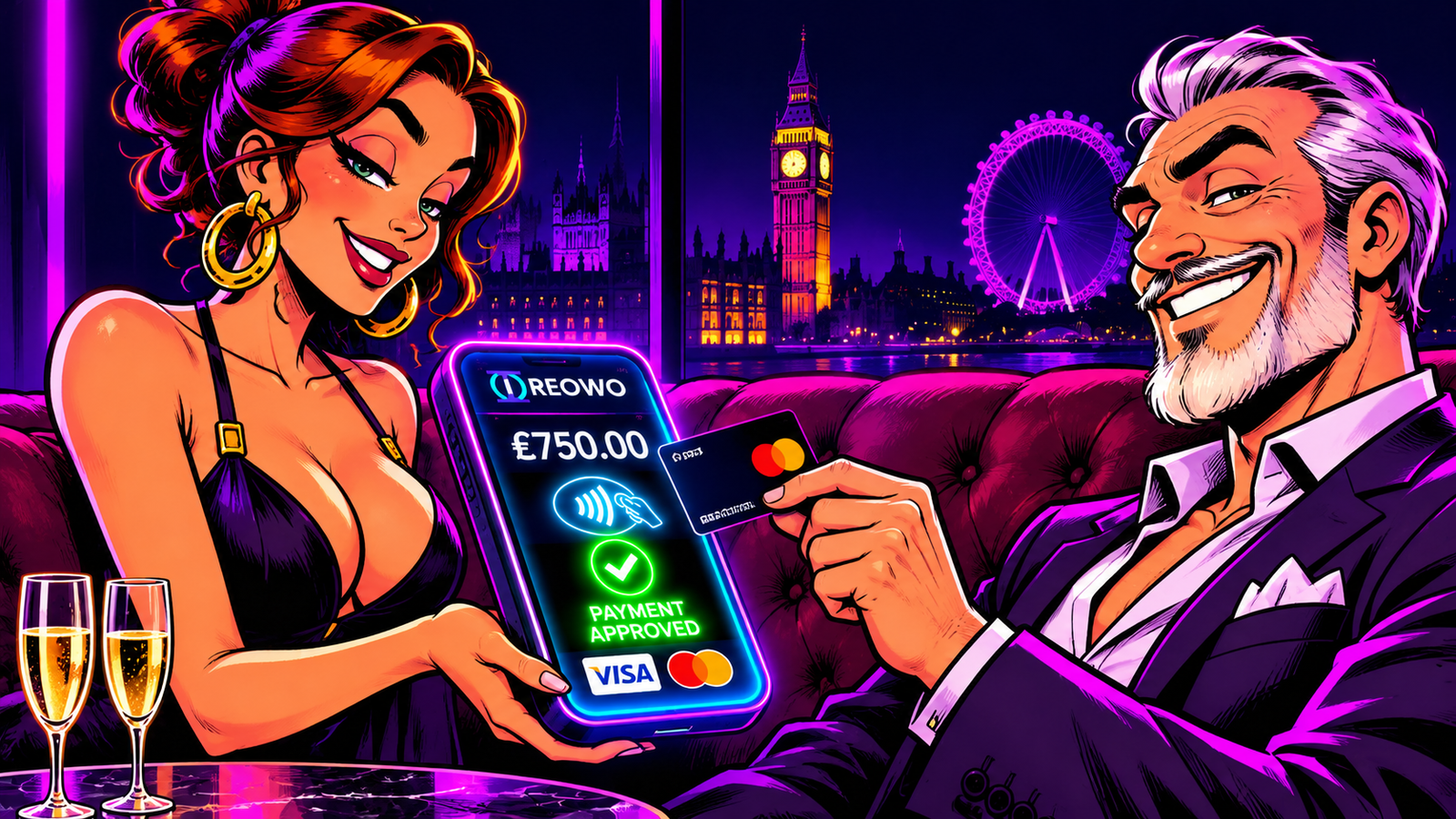
Spending also continues through the evening: extra bottles, mixers and drinks after the first payment. Payment terminals for VIP venues should show amounts clearly, and staff should know which table every payment belongs to. Larger amounts may require a PIN or authentication on the guest's phone rather than a simple tap. Giving the VIP team dedicated portable terminals also keeps VIP payments separate from the main bar.
Contactless Payments in Nightclubs
Contactless payments for nightclubs come down to speed and convenience. At a crowded bar, a guest who taps a card, phone or watch pays in a moment, which keeps the queue moving.
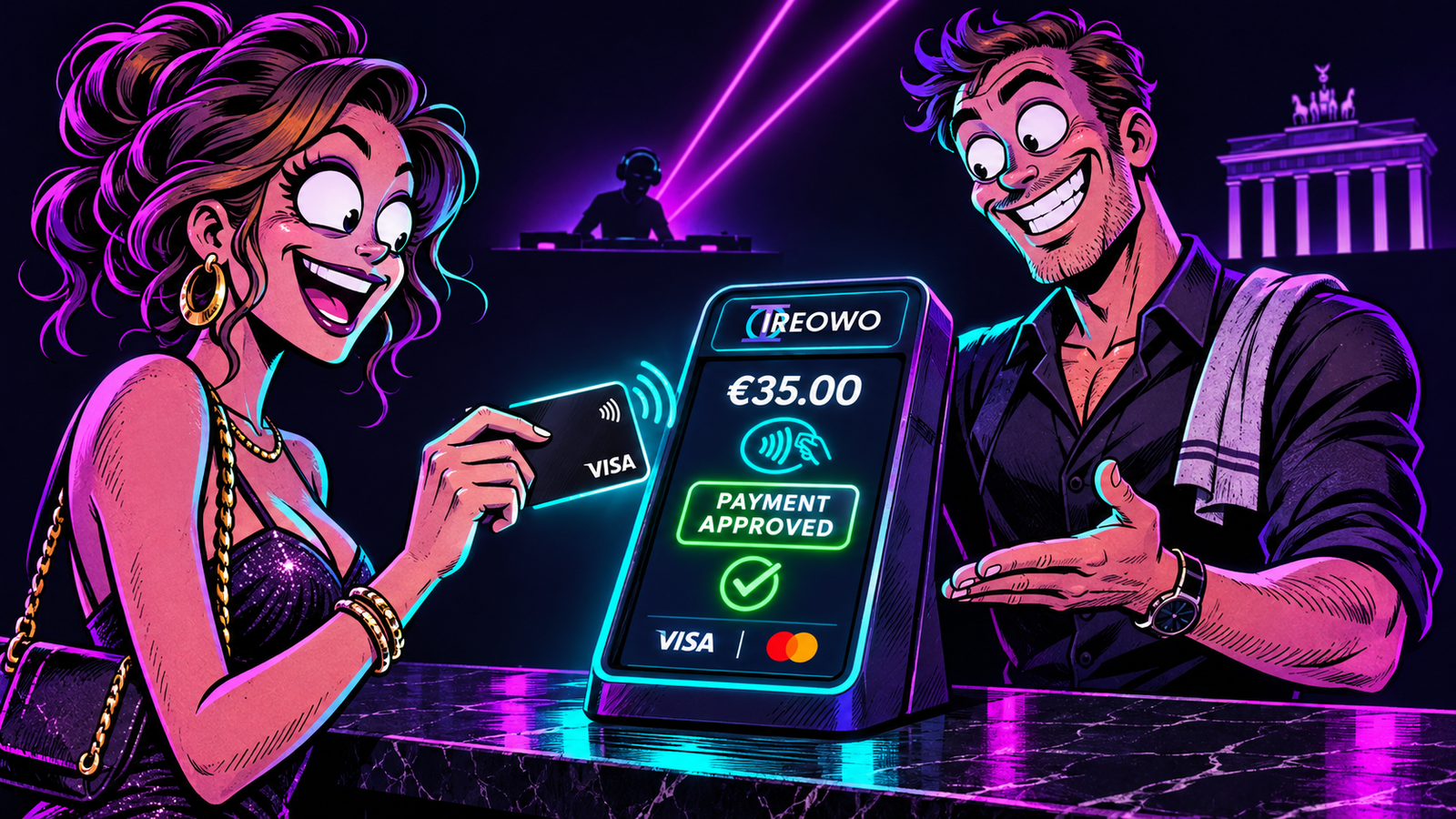
Many terminals accept contactless Visa and Mastercard cards, and Apple Pay and Google Pay where supported by the provider and terminal. Contactless card payments have per transaction limits that vary by market, and under strong customer authentication rules in Europe and the UK a card may occasionally ask for a PIN even on a small amount. Wallet payments are authenticated on the phone or watch itself.
Managing Peak Payment Times
Friday and Saturday nights, events and closing time put the most pressure on nightclub payment processing. A setup that copes on a Thursday may struggle at 2am on a Saturday.
- Busy bars: enough terminals for every bartender working at peak.
- Events: guest DJs and themed nights may justify extra terminals.
- Closing time: last orders and open VIP tabs land together, so plan who settles what.
- Payment zones: assign terminals to areas so devices do not drift around the venue.
- Contactless first: encourage tap payments at the bar to keep transactions short.
Charge portable terminals before doors open and keep a spare ready.
Card Payments at the Entrance
Some venues take payments at the entrance, for example an entry charge on the night. A fixed terminal on the door desk works when staff stay in one spot; a portable terminal helps when door staff move along the queue or cover the cloakroom too. Keeping entrance payments on their own terminal also keeps door revenue separate from bar sales. Tickets sold online before the night are a different setup, covered in our guide to payment processing for ticketing and event businesses.
International Customers and Foreign Cards
Nightlife destinations across Europe attract many international visitors. A club in London, Amsterdam, Berlin or Barcelona, or a venue in Ibiza during the season, may serve guests from many countries on the same night, as do weekend favourites such as Prague and Lisbon.
Those guests often pay with cards issued abroad, so accepting foreign Visa and Mastercard cards, and wallets linked to them, matters for any venue with a tourist audience. Acceptance depends on the provider, terminal, card type and issuing bank, so no setup can guarantee every card will work.
Visa, Mastercard and Digital Wallets
Most guests in European and UK nightlife expect to pay with Visa or Mastercard debit and credit cards, contactless cards, Apple Pay or Google Pay. Support for each depends on the provider and the terminal. Before rolling out card terminals for nightlife venues, confirm which networks and wallets are enabled on your devices rather than assuming every method works everywhere. It also helps to know the Visa and Mastercard rules every merchant should know.
Refunds and Payment Errors
Mistakes happen in a busy venue. Your terminals should make it easy to:
- cancel and retake a payment entered with the wrong amount
- spot and correct a duplicate payment
- refund to the original card, ideally restricted to managers
- cancel a transaction before settlement, where applicable
- check clear transaction records showing time, amount and terminal
Payment Reporting Across Different Areas
When each terminal is assigned to a specific part of the venue, its transactions show where money is taken: the main bar, VIP, the entrance, the second floor, the secondary bar or private areas. This makes it easier to compare zones, check takings at the end of the night and see which areas are busiest when. How you use that data in your accounts is a matter for your accountant.
Card Machines for Multi Floor Nightclubs
Larger venues often have several bars, multiple rooms, different floors and sometimes different concepts under one roof, such as a cocktail lounge upstairs and a club room below. Bars and clubs that sit inside a hotel share some of these needs, and the wider property is covered in our guide to card machines for hotels in Europe and UK. Here, mobility and multiple payment points matter even more. Each floor needs its own terminals so staff never leave their area to take a payment, portable devices cover large rooms, and terminals assigned by floor keep payment data organised.
Connectivity Inside Nightlife Venues
A card machine is only as reliable as its connection, and nightlife venues can be difficult environments:
- WiFi can drop in corners, booths and back rooms.
- Mobile connectivity is often weak indoors.
- Thick walls in older or soundproofed buildings block signal.
- Basements may have very limited reception.
- Different floors are rarely covered well by one router.
- Distance from network equipment weakens the connection.
- Backup connectivity, where available, such as switching between WiFi and mobile data, adds resilience.
Test the connection in every payment area, ideally on a busy night. Results vary by building, network and terminal.
How Much Do Card Machines for Nightclubs Cost?
There is no single price. Pricing depends on transaction volume, average transaction value, card mix, number of terminals and the provider. The main components are:
- Transaction fees on each card payment
- Terminal costs, whether bought, rented or included
- Acquiring, the service that processes card payments and settles funds
- Number of terminals across the venue
- Card mix of debit, credit and business cards
- International cards, which may be priced differently from domestic ones
- Provider pricing, which each provider structures its own way
Ask for a clear breakdown of each component before comparing offers.
Card Machines for Nightlife Venues Across Europe and UK
Nightlife venues across Europe and the UK share similar needs. They serve local customers on regular nights and international visitors through tourism and weekend trips. Contactless is widely used, as UK Finance payment reports regularly show for the UK, and physical card payments remain central to how bars, clubs and VIP venues take money on the night.
What differs is the layout: a single room cocktail bar and a two floor club with a VIP mezzanine need very different terminal setups. Card payment solutions for nightlife venues work best when designed around that layout.
Why Work With IREOWO?
IREOWO works with businesses that need reliable card present payment infrastructure across several areas of a venue. We help nightclubs, bars and VIP venues explore payment solutions based on their business model, transaction volume, average ticket size, number of terminals, venue layout, need for portable terminals, international customers and required payment methods.
Rather than one standard device, we look at how payments flow from the main bar to the VIP tables and explore options with our payment partners that fit.
Get the right card machines for your nightclub, bar or VIP venue
Tell us about your bars, your VIP areas and the payment points you need. IREOWO will review your setup and explore suitable card payment options with our partners. You pay nothing unless approved.
Frequently Asked Questions
+What type of card machine does a nightclub need?
It depends on the venue layout and payment volume. Most nightclubs combine fixed card machines at the main bars with portable card machines for tables, VIP areas and other points where staff go to the customer. The number of bars, staff, payment areas and peak volume all shape the right setup.
+Can a nightclub use portable card machines in VIP areas?
Yes. Portable card machines are commonly used in VIP areas so staff can bring the terminal to the table and guests can pay without walking to the bar. Performance depends on the provider, the terminal and the connectivity inside the venue.
+Can one nightclub use several card machines?
Yes. Many nightclubs use several card machines across the main bar, secondary bars, VIP areas, the entrance and the cloakroom. Assigning terminals to specific areas also makes it easier to see where payments are taken.
+Can nightclubs accept Visa, Mastercard, Apple Pay and Google Pay?
Many card machines accept Visa and Mastercard cards, contactless payments and digital wallets such as Apple Pay and Google Pay. Availability depends on the provider, the terminal and the payment setup.
+Does IREOWO guarantee approval for nightclub payment processing?
No. Availability depends on the business model, payment setup and payment partners available.