

Picture this: you wake up, check your store dashboard, and the previous day's sales were a total success. Your marketing campaigns are working, traffic is climbing, and revenue is growing. Then, a couple of weeks later, a notification from your payment processor sends a chill down your spine: "Dispute opened: Chargeback."
Just like that, the money you already counted as yours vanishes from your account. The product was already shipped, or the digital service was already delivered, and on top of it all, your bank charges you a penalty fee for the privilege of having your sale stolen.
This is the daily reality for thousands of digital entrepreneurs. In today's e-commerce ecosystem, and especially in high-risk businesses, the most destructive enemy is not your competitors or processing blocks. It is fraud. Not the Hollywood hacker kind, but a far more common, silent, and lethal threat: chargebacks and friendly fraud.
Below, we break this problem down piece by piece and explain how a solid infrastructure like Ireowo's can become your definitive shield.
What Is a Chargeback, and Why Does It Exist?
A chargeback is, at its most basic, the forced reversal of funds from a transaction back to the buyer's credit card.
Historically, this mechanism was introduced by card networks, Visa and Mastercard, in the 1970s as a consumer protection measure. The intention was straightforward: give people the confidence to pay by card knowing that, if a merchant turned out to be a scammer who never shipped the product, they would not lose their money.
The problem is that the entire system is built on the assumption that the customer is always right. Today, opening a dispute is as easy as two taps in a banking app. This has created a balance dangerously tilted against e-commerce owners, who are treated as guilty until they can prove otherwise through a bureaucratic, time-consuming, and costly process.
For a clear overview of how card dispute rights work from the consumer side, the Federal Trade Commission's guide on disputing credit card charges is a useful reference point that illustrates just how easy the process has become for buyers.
Friendly Fraud: The Wolf in Sheep's Clothing
Not every chargeback involves malicious intent. Sometimes a package genuinely gets lost in transit, or a card is cloned by actual criminals. However, the industry estimates that over 70% of chargebacks today fall under the category of Friendly Fraud, according to data from the Merchant Risk Council.
Why is it called "friendly"? Because it is not committed by a hacker on the dark web. It is committed by an apparently normal customer, using their own card, their own name, and their own IP address, who receives their order in perfect condition but then deceives their bank to get a free refund.
The Most Common Friendly Fraud Excuses
- "I never authorized this charge": The number-one excuse. The customer knows exactly what they bought but tells their bank they do not recognize the transaction.
- "The product never arrived": Extremely common with physical products that lack a strict tracking number, or with digital downloads where proving delivery is difficult.
- "My child got hold of my phone": A classic in the world of video games, apps, and digital subscriptions.
- "The product is defective or not as described": Instead of requesting a normal refund from your store (which would require returning the item), they go directly to the bank to keep both the product and the money.
This type of fraud is incredibly hard to fight because the buyer's intent is hidden and the issuing bank will almost always side with its own customer.
 Ireowo's dashboard centralizes fraud pattern detection and dispute monitoring in real time, giving merchants full visibility over every transaction.
The True Cost of a Chargeback: A Capital Drain
One of the most common mistakes entrepreneurs make is assuming the cost of a chargeback equals the price of the product sold. The financial reality is far darker. A chargeback is a black hole that absorbs multiple resources simultaneously.
| Cost Type | Description | Financial Impact |
|---|---|---|
| Direct Loss | The sale amount the bank removes from your account immediately. | 100% of the purchase value. |
| Product Cost | The physical item, service hours, or digital access you already delivered. | Variable, but unrecoverable. |
| Chargeback Fees | The penalty your processor charges per dispute (typically $15 to $50, even if you win). | Fixed cost per event. |
| Operational Costs | The customer acquisition cost (CAC) and the time spent packing and shipping. | High impact on ROI. |
| Dispute Time | Hours you or your team spend gathering evidence, receipts, and screenshots to fight the bank. | Loss of productive hours. |
Is your chargeback ratio creeping up and you are not sure how to stop it? Talk to an Ireowo specialist and protect your revenue before the damage compounds.
Start protecting your high-risk business now → You pay nothing unless approved.The Ultimate Threat: The MATCH Program
Both Visa and Mastercard continuously monitor your Chargeback Ratio. If you exceed that threshold on a recurring basis, your payment processor will freeze your funds and terminate your account. Worse still, they will place you on the MATCH list (Terminated Merchant File), which is essentially a global financial blacklist.
If your name or your company's name ends up there, no legitimate bank or processor will work with you for years. Your e-commerce operation is, for all practical purposes, dead. This is precisely the scenario we examine in our analysis of the hidden risks of operating with offshore companies and unregulated payment processors: without a solid corporate structure, any problem is amplified exponentially.
Why High-Risk E-commerce Is the Primary Target
Friendly fraud does not affect everyone equally. If you sell physical shoes from a well-known brand with certified delivery, your risk is relatively low. But if you operate in the high-risk sector, you are squarely in the crosshairs.
Industries With the Highest Exposure to Payment Disputes
- Digital Products and SaaS: Without a physical delivery signature, it is very easy for a customer to claim "the link did not work" or "I never received the access email."
- Subscriptions and Free Trials: Customers forget to cancel, get billed the following month, and rather than contact support, call their bank claiming the charge is fraudulent.
- Nutraceuticals and Supplements: Markets built on dramatic results claims, where customer expectations frequently collide with reality.
- Forex, Crypto, and Trading: The customer can lose their investment and, in a burst of frustration (classic buyer's remorse), demand the bank return their deposited capital.
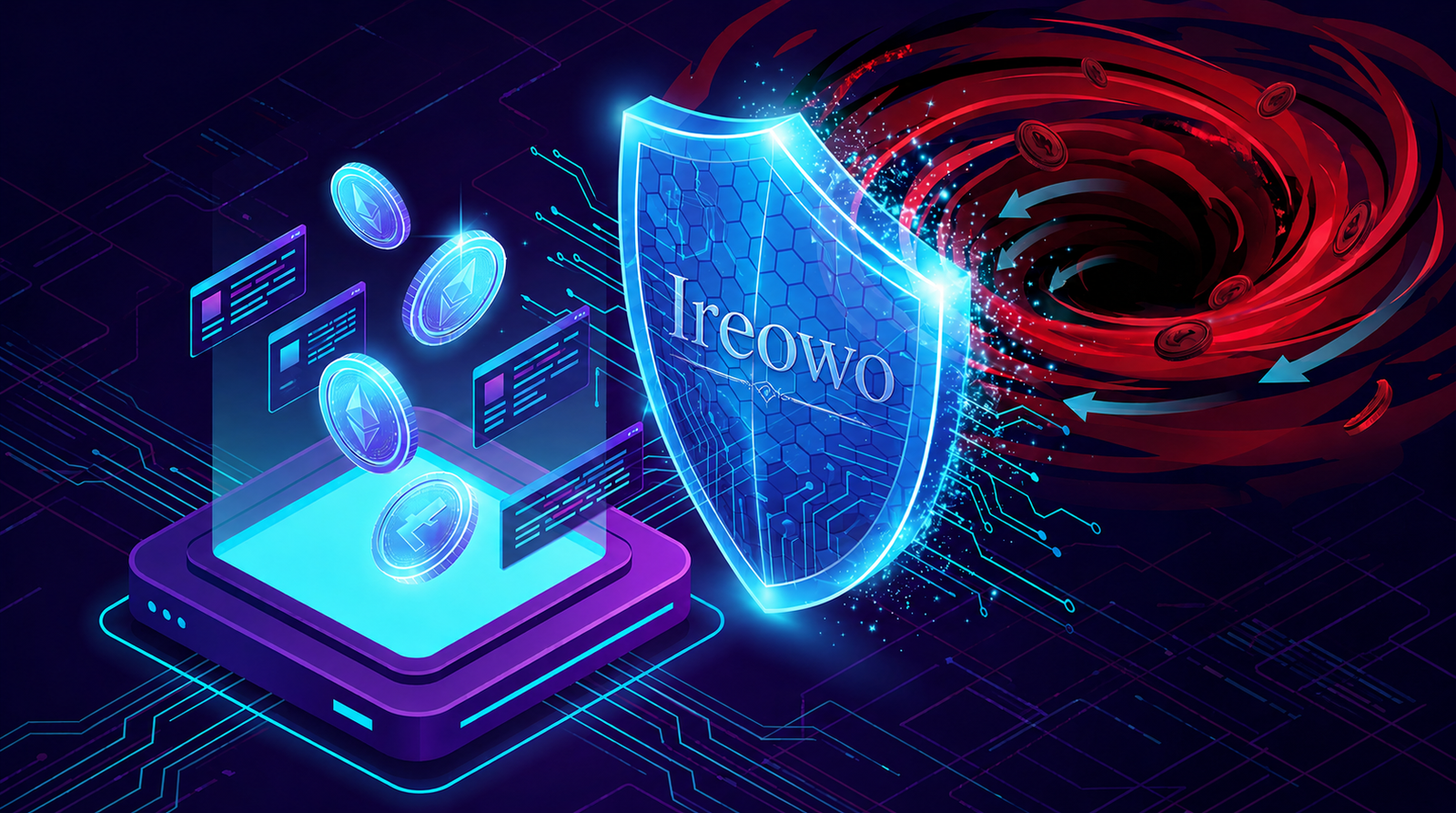 Ireowo's anti-fraud infrastructure acts as an active shield on every transaction, filtering risk before it ever reaches your account.
The Ireowo Anti-Fraud Shield: Your Real Line of Defense
This is where your choice of financial partner makes the difference between collapse and sustained success. Standard payment processors, the ones that approve your account in five minutes without asking questions, will leave you completely alone when chargebacks start arriving and will shut you down at the first sign of trouble.
At Ireowo, we understand that fraud is a technical problem that demands technological, legal, and structural solutions. Here is how our infrastructure fortifies your e-commerce operation:
1. 3D Secure 2.0 Implementation (Liability Shift)
The best way to win a dispute is to prevent it from happening in the first place. By deploying 3DS 2.0 technology, which asks the customer to confirm their purchase inside their bank's app via biometrics or SMS, a Liability Shift takes place. If the customer passes this security filter and later claims "that was not me," the issuing bank absorbs the loss, not you. Ireowo connects you with European acquirers that support and optimize this protocol without creating excessive friction for the end user.
2. Smart Routing and Risk Analysis
Not every transaction should be treated the same way. Our gateway analyzes dozens of data points in milliseconds: the buyer's IP address, typing speed, whether the card matches the country of origin. If a transaction shows signs of fraud, it is blocked before approval, sparing you from the future chargeback penalty.
3. Local European Representation (Legal Entity)
Fighting an international chargeback from a tax haven is a losing battle as banks will simply ignore you. Ireowo helps you establish a solid corporate structure in Europe. Presenting evidence (receipts, access logs, terms and conditions) under the umbrella of a European company with a local acquirer gives you immense legal weight and credibility with Visa and Mastercard, significantly raising your win rate on disputes.
5 Practical Strategies to Shield Your Business Starting Today
While you build your solid banking infrastructure with Ireowo, here are five frontline tactics you can apply to your e-commerce operation right now to reduce your chargeback ratio:
Optimize Your Billing Descriptor
The descriptor is the text that appears on the customer's bank statement. If your store is called "Fast Sneakers" but your legal entity is registered as "XYZ Investments Ltd," the customer will not recognize "XYZ" on their statement and will panic. Make sure your descriptor is clear, includes your store's trading name, and ideally a support phone number.
Make Refunds Easier Than Chargebacks
If a customer wants their money back, give it to them. Processing a voluntary refund is a thousand times cheaper than facing a chargeback with its accompanying fees and ratio damage. Display your return policy prominently and offer fast, empathetic customer service.
Collect Digital Footprints on Every Transaction
Especially for digital products, record the IP address, the date and time of access, and whenever possible, logs proving the user downloaded the file or logged into the platform. This becomes your primary ammunition in any dispute.
Send Subscription Reminders Before Billing
If you charge recurring fees, send an automated email three days before the billing date reminding customers that their payment is about to be processed. This eliminates complaints about "surprise charges" at the root.
Always Ship With Trackable, Verifiable Delivery
For physical products, never ship without a tracking number. A confirmed delivery notification from the postal carrier is the definitive proof that dismantles an "item not received" claim.
Protect Your Business Cash Flow Now
Friendly fraud and chargebacks are an epidemic that is not going away. Do not let your revenue drain through a black hole of bank penalties and dishonest customers. You need a structure that has your back, processors that understand your business model, and cutting-edge anti-fraud technology.
Start processing payments for your high-risk business → You pay nothing unless approved.Curious Things You're Probably Wondering
If I win a chargeback dispute, do I get the penalty fee back?
In most cases, no. The chargeback fee, typically between $15 and $50, is charged by your processor simply for handling the dispute, regardless of the outcome. Even if you prove the customer lied and recover the sale amount, the administrative cost has already been deducted from your account. Some premium processors may refund these fees if you win, but that is the exception rather than the rule. It is one of the strongest arguments for investing in prevention rather than recovery.
How much time do I have to dispute a chargeback before it is too late?
Deadlines vary by card network, but as a general rule you have between 20 and 45 calendar days from the notification to submit your rebuttal evidence. Once that window closes, the bank automatically rules in the customer's favor. This means you need an active alert system and pre-organized evidence, such as access logs, receipts, and delivery confirmations, ready to deploy quickly. With Ireowo, dispute monitoring is integrated into your dashboard so you never miss a critical notification.
Is friendly fraud actually illegal? Can I report the customer?
Technically yes: filing a false dispute with a bank is a form of fraud and can be pursued legally. In practice, transaction amounts are often too low to make legal action worthwhile. However, if you have solid evidence, such as access logs, signed delivery confirmation, or communications where the customer acknowledges the purchase, you can file a fraud complaint with local authorities and simultaneously send that documentation to the customer's issuing bank to strengthen your position in the dispute. For high-value transactions, this combination can make a real difference.
What happens if I am already on the MATCH list? Is there a way out?
The MATCH list carries a standard period of five years. During that time, most conventional processors and acquiring banks will reject your application automatically. However, there are legitimate structural alternatives: operating under a newly and properly incorporated legal entity, with a clean processing history and backed by an ISO specialized in high-risk merchants, can open doors that would otherwise remain closed. It is essential to do this in a fully legal and transparent manner. At Ireowo, we analyze each case individually to assess which structuring options are viable for your specific situation.
Will 3D Secure 2.0 hurt my store's conversion rate?
This is the most common concern, and the answer depends entirely on how it is implemented. The original version, 3DS 1.0, did generate considerable friction and elevated cart abandonment rates. Version 2.0 was designed specifically to fix that: it uses real-time risk analysis to determine whether a payment is sufficiently safe without requiring an additional authentication step. In practice, 95% or more of low-risk transactions pass through completely transparently for the customer. Only transactions flagging risk signals trigger the extra verification step. The net result is that you protect your revenue without sacrificing user experience, particularly when working with well-calibrated European acquirers like those in the Ireowo network.
Can a payment processor drop me if I have too many chargebacks?
Absolutely, and it happens faster than most merchants expect. Conventional processors have very low tolerance thresholds, generally the 1% monthly limit set by Visa and Mastercard. If you exceed it on a sustained basis, you will first receive formal warnings and then face unilateral account termination, often with funds held in reserve for an additional 90 to 180 days. The difference with a high-risk specialist processor like those Ireowo works with is that they operate with rolling reserve structures specifically calibrated to absorb these fluctuations without halting your operation.