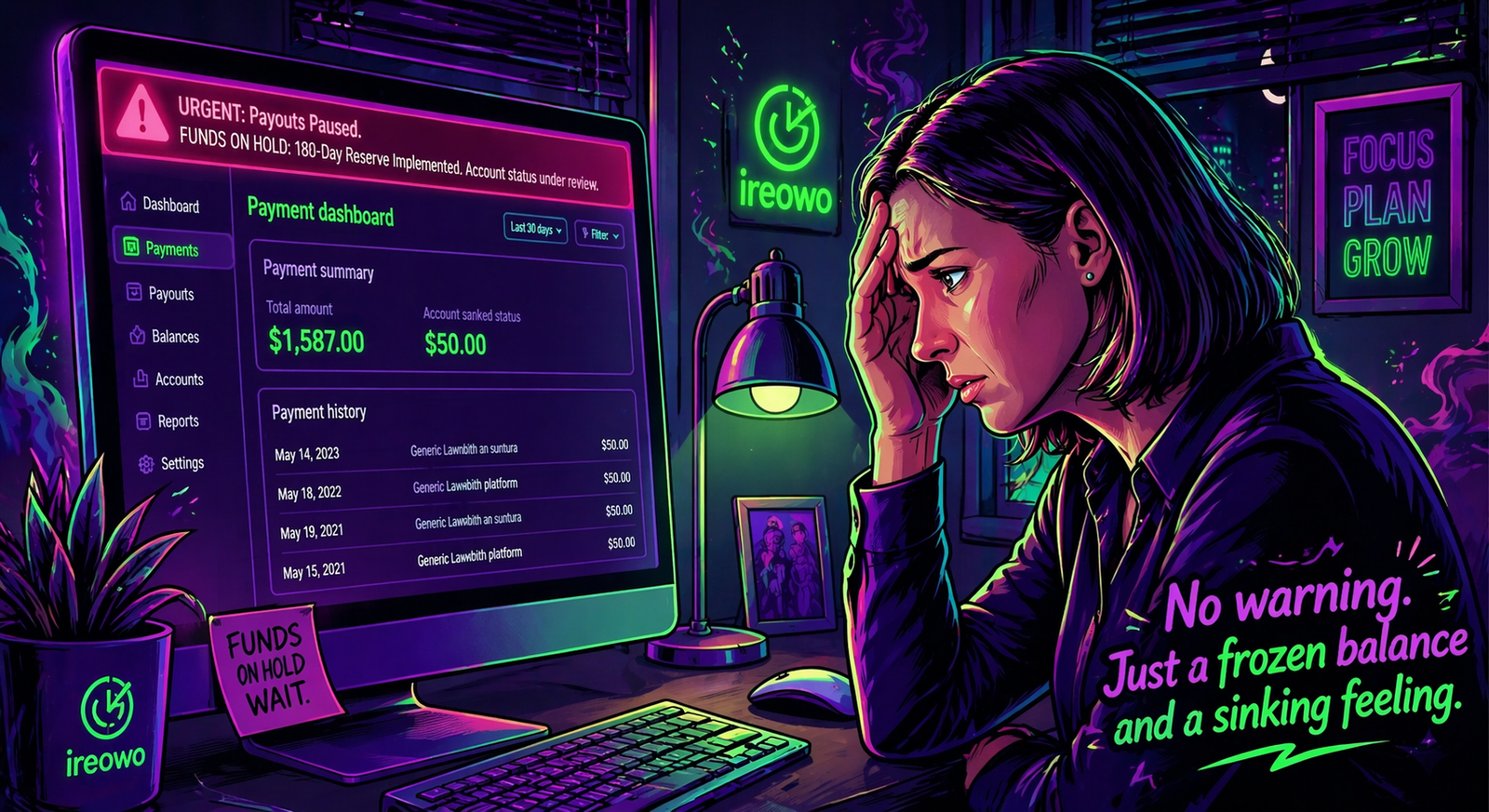


There is a list no merchant wants to see their name on. It is called MATCH, and for thousands of high-risk businesses, it marks the point where their ability to process card payments simply ends. Once your name enters this database, every acquiring bank in Europe and beyond can see it before they even consider opening your account.
At Ireowo, we work every day with merchants in industries like adult content, gaming, nutraceuticals, and cryptocurrency. We know exactly what leads a business into this blacklist, and we know the best defense is understanding it before it happens to you.

What Is the Mastercard MATCH List?
MATCH stands for Mastercard Alert to Control High Risk Merchants. It is a centralized database that Mastercard maintains, and every acquiring bank is required to check it before signing a contract with a new merchant. The system was originally called the Terminated Merchant File, or TMF, a name many industry professionals still use interchangeably.
The purpose of the MATCH list is simple, even though its consequences are not. When an acquiring bank closes a merchant account for a serious reason, it is required to report that merchant to Mastercard, along with a reason code explaining why. That record then becomes visible to any other acquirer that looks into your business in the future.
How the Listing Process Works
The acquirer that terminates your contract has one business day to report you to MATCH. The report includes your company's legal name, the details of the principal owners, your tax identification number, and the relevant reason code. From that moment on, any financial institution that queries the database sees your history immediately.
The most delicate part is that the list does not distinguish intent. It does not matter whether you made an operational mistake or acted in bad faith, the system logs the fact and keeps it available for five years from the date of listing, regardless of the changes you make to your business afterward.
The Reasons That Lead to the Payments Exile
Mastercard defines several reason codes to justify a MATCH listing. Not all of them carry the same weight, but they all share one thing in common, they all represent a risk that no bank wants to take on again.
Fraud and Illegal Activity
If one of your business owners was convicted of fraud, or if your company took part in transactions linked to illegal activity, listing is nearly automatic. This code makes clear that legal liability is involved, not just a management issue.
Money Laundering and Transaction Laundering
Processing payments for a business different from the one you declared to your acquirer, known as transaction laundering, is one of the most common causes among high-risk merchants. Mastercard watches closely for it because it opens the door to money laundering, and the penalties are not limited to the merchant, they also reach the bank that allowed the transaction through.
Excessive Chargebacks
This is the most common cause among otherwise legitimate merchants who simply did not manage their disputes well. When your chargeback ratio exceeds the threshold set by Mastercard's chargeback monitoring program for several months in a row, and you fail to bring it back down, your acquirer can choose to close your account and report you. You do not need a massive volume of disputes, the absence of an active management strategy is enough on its own.
PCI DSS Non-Compliance and Other Violations
Failing to properly protect your customers' card data, as required by the PCI DSS standard, can also land you on this list. The good news is that this is one of the few reason codes that allows you to request removal once you can demonstrate full compliance with the standard.
No high-risk acquirer wants to take a chance on you if you are already carrying a messy history. At Ireowo, we connect your business with licensed banks in Europe from day one, with the right structure in place so MATCH never becomes your problem.
You pay nothing unless approved
Start Processing Payments for Your High-Risk Business NowThe Consequences of Being on the MATCH List
Automatic Rejection From Acquiring Banks
Most traditional acquirers automatically reject any application that shows up on MATCH, no matter how much your business has changed since the listing. For many banks, simply appearing on the list is reason enough to end the conversation.
Higher Reserves, Fees, and Harsher Contracts
If you do manage to find a processor willing to work with you, the terms change entirely. Fees go up, your rolling reserve becomes far more aggressive, and contracts come loaded with exit clauses that leave you with far less room to maneuver.
Long-Term Reputational Damage
Beyond the numbers, being on MATCH sends a negative signal to investors, business partners, and future banking relationships. It is a mark that follows your company for a full five years, even after the original reason no longer reflects the reality of your business.
Can You Get Off the MATCH List?
Removal options are limited. For most reason codes, the only real way off is to wait out the five years set by Mastercard's policy. The main exception is the code tied to PCI DSS non-compliance, where once your compliance is certified, your original acquirer can request that the record be removed.
It is also possible to dispute a listing if you believe it was an administrative error, but that process depends entirely on the willingness of the bank that reported you, and it rarely moves quickly.

How to Avoid the MATCH List From the Start
Choose a Partner With Real High-Risk Experience
Most MATCH listings happen because the merchant worked with unlicensed or poorly structured processors, ones that end up closing accounts abruptly without offering any guidance beforehand. A partner like Ireowo understands the Visa and Mastercard rules for your specific vertical and structures your account correctly from day one, with licensed acquiring banks in the European Union.
Manage Your Chargebacks Proactively
Set up early alerts, respond to every dispute with solid evidence, and monitor your ratio month over month. The difference between a healthy business and one at risk usually comes down to how fast it reacts to the first signs of trouble.
Stay Compliant Before It Becomes a Problem
Keep your PCI DSS compliance current, document every internal process, and make sure the true nature of your business is accurately declared to your acquirer. Transparency from the start is, by far, the cheapest strategy for avoiding the payments exile.
Avoiding the MATCH list starts with choosing the right first processing partner. At Ireowo, we structure your high-risk business with licensed European banks, so you can grow with real stability and no surprises.
You pay nothing unless approved
Frequently Asked Questions
How long does a merchant stay on the MATCH list? +
Generally, five years from the date of listing. After that period, Mastercard removes the record automatically, unless a new listing resets the clock.
Are MATCH and the Terminated Merchant File the same thing? +
Yes. Terminated Merchant File, or TMF, was the system's original name. It is now officially known as MATCH, though many industry professionals still use both terms interchangeably.
Can I find out if I'm on the MATCH list before a bank tells me? +
Not directly. Access to the database is restricted to acquiring banks and authorized processors. The most reliable way to find out is to ask directly, either the bank that closed your account or the processor reviewing your new application.
Can a business on the MATCH list process payments again? +
It's difficult, but not impossible in every case. Some high-risk specialized processors evaluate each situation individually, though they almost always require stricter terms, higher reserves, and a clear explanation of the corrective steps taken.
What's the safest way to avoid the MATCH list altogether? +
Work from the start with a partner who understands your high-risk vertical, keep your chargeback ratio under control, and stay fully transparent about the true nature of your business with your acquiring bank.
Official Resources
To dig deeper into the official rules behind this database, you can consult these sources directly from Mastercard and European regulators:
- Official MATCH privacy notice, Mastercard
- MATCH technical documentation, Mastercard Developers
- Anti-money laundering regulation, European Banking Authority (EBA)
Don't let an unstructured processor put your business's future at risk. Work with an ISO that knows the Visa and Mastercard rules for high-risk merchants, and process with the confidence of a licensed European bank behind you.
You pay nothing unless approved
Start Processing Payments for Your High-Risk Business Now